Cuts by hair type
Wavy Hair Is Its Own Hair Type: 2A, 2B, 2C Routines That Work
Wavy hair needs its own routine, not a diluted curly one. Identify your subtype first: wash, apply nothing, do not touch it, and let it air dry. If it sets in S-bends rather than spirals, you are a 2. From there the routine is minimal: shampoo every 2 to 4 days, one lightweight styler applied to soaking wet hair, scrunch, then air dry or diffuse on low.
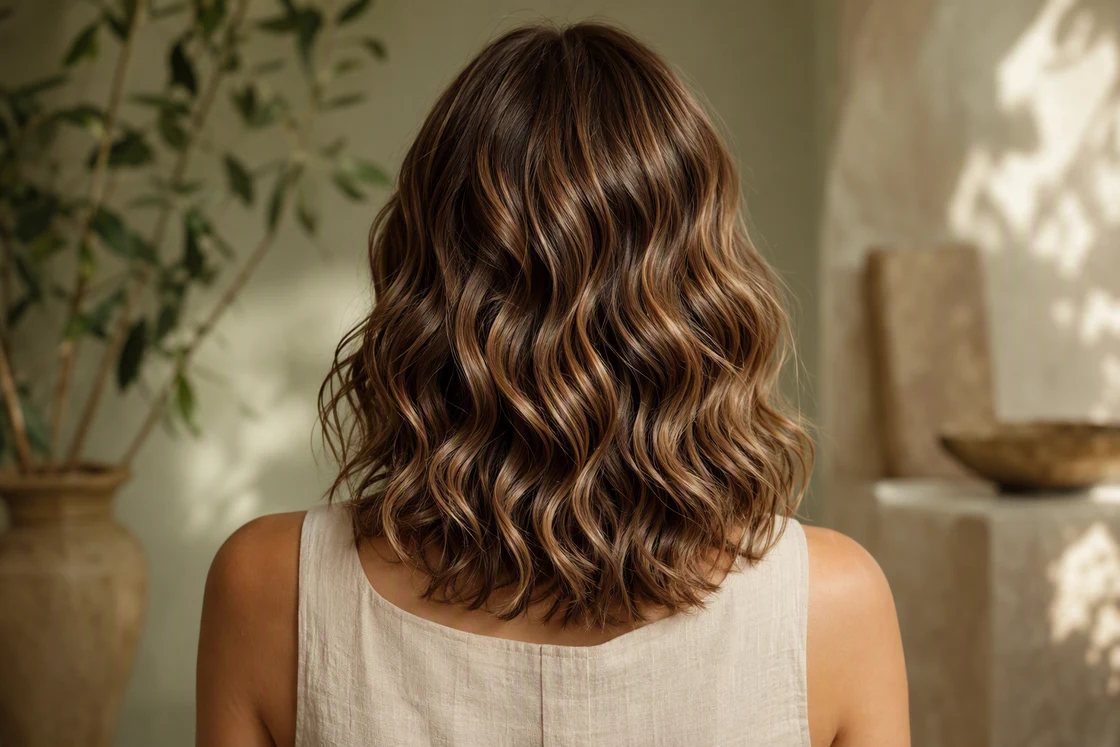
Wavy hair is the worst-served hair type on the internet. Straight-hair advice tells you to brush it smooth, which destroys the pattern; curly-hair advice buries it under leave-ins and butters engineered for a fiber twice as curved and half as oiled. The result is a generation of wavy-haired women convinced they have “frizzy straight hair” or “failed curls.” This guide starts where every wavy routine should start, with identification, then defines the 2A to 2C spectrum precisely, explains why the full curly girl method backfires on waves, and builds a minimal routine per subtype with honest costs in minutes and dollars.
How do you know if your hair is wavy or curly?
One test settles it, and it costs nothing but a wash day. The rules matter more than the wash: wet hair is at its most moldable, so any handling while it dries writes a false answer into the result.
The wet test, step by step:
- Shampoo and lightly condition. Rinse thoroughly. No styling product of any kind afterward.
- Squeeze out excess water with your palms, downward, once. Do not rub with a towel.
- Part it roughly where it naturally falls and then do not touch it again. No brushing, no tucking behind ears, no checking with your fingers.
- Let it air dry completely, which takes 2 to 6 hours depending on density. Then look.
Read the result on one question: did it dry with an S-bend untouched?
- Dries flat or with a slight bend only at the very ends: straight, type 1. A bend that appears only where hair was tucked or clipped does not count.
- Dries with S-shaped bends along the length that never complete a loop: wavy, type 2. The strand changes direction, left then right, but no section wraps 360 degrees around itself.
- Sections wrap into full loops, springs or ringlets you can hang a finger in: curly, type 3.
- Tight zigzags or coils with visible shrinkage of half or more: coily, type 4.
The loop is the boundary. Wavy hair bends; curly hair orbits. If some canopy sections form loose S-waves while the under-layer at your nape spirals, you have a mix, which is common: a worldwide measurement study of 2,449 subjects found hair curvature varies continuously across people and even across one head, with no natural cutoff lines between categories [1]. Route your routine to the dominant pattern and give the curlier under-layer a little extra styler.
Two test-day caveats. First, length is weight: hair past the shoulder blades can hang its own wave out, so a “straight” result on very long hair is provisional until you retest at a shorter length or examine the root 10 centimeters. Second, heat and chemical damage flatten waves; if your hair dries wavy after a fresh cut but straight at the weathered ends, believe the roots.
What do 2A, 2B and 2C actually mean?
The letters come from the Andre Walker system, created in 1997 by Oprah Winfrey’s longtime stylist to market his product line, and later adopted as the internet’s default typing language [6]. It is a stylist’s convention, not a measurement standard: researchers who actually measured curvature proposed eight instrument-defined categories precisely because the popular system was never validated [1]. The convention survives because it is useful shorthand, and this article uses it that way. Here is the spectrum, defined by where the bend starts and how the hair behaves, not by how a photo looks.
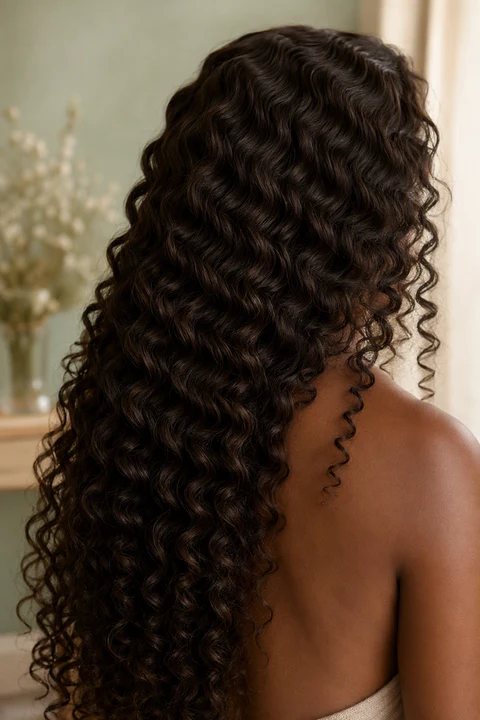
| 2A | 2B | 2C | |
|---|---|---|---|
| Pattern | Loose, stretched S; barely-there bend | Defined S-waves through the mid-lengths | Deep S-waves with occasional true ringlets mixed in |
| Where the wave starts | Mid-length; the first 10 cm at the root lie flat | From roughly eye level down; roots mostly flat | At or near the root; visible ridge off the scalp |
| Typical strand and volume | Often fine, low volume, oils fast | Medium texture, moderate volume, crown frizz | Often coarser or denser, most volume, most frizz |
| What kills the pattern | Any weight: heavy creams, long one-length cuts | Brushing when dry, skipping styler | Under-conditioning, rough drying, humidity swings |
| Cleanse cadence | Every 2 to 3 days | Every 2 to 4 days | Every 3 to 4 days |
| One styler | Light mousse | Light-to-medium gel | Medium-hold gel over a light leave-in |
| Drying default | Air dry | Air dry or short diffuse | Diffuse on low |
Two spectrum truths worth internalizing. The distance between 2A and straight hair is one heavy conditioner; the distance between 2C and 3A curls is one humid afternoon. Subtype is also not fixed: cut, damage, hormones and product load all shift where you land, which is why the routine sections below are written as adjustable dials rather than identities.
Why does the full curly girl method overload wavy hair?
The curly girl method, popularized by stylist Lorraine Massey’s 2001 handbook, prescribes zero shampoo or co-washing only, no brushes, no heat, and layered leave-in conditioners, creams and gels. For the 3 and 4 types it was written for, this solves real problems: tightly curved fibers block scalp oil from traveling down the strand, so the lengths run chronically dry and can absorb heavy conditioning agents.
Waves are a different substrate, and the method’s core assumptions fail on them one by one.
Waves are not oil-starved. Sebum travels down a gently bent fiber far more easily than around tight turns, so wavy lengths receive meaningful natural conditioning that curls never see. Stack curl-strength moisture on top and the hair is overconditioned within weeks: limp, stringy, waves stretched to ghosts.
Co-washing builds up on waves. Washing with conditioner deposits cationic conditioning agents that are designed to resist rinsing and accumulate on the fiber [4]. Curls can tolerate, even need, that residue. On fine wavy hair it is dead weight at the root, and the standard curly-forum advice at that point, add more product for definition, compounds the problem. Actual cleansing surfactants exist to remove exactly this [4], which is a research-backed reason wavy routines keep shampoo.
Weight is the enemy of a weak pattern. A wave is a shallow bend held by relatively few internal bonds. Every gram of butter or cream is load that a 2A or 2B pattern cannot lift. Curly hair loses some spring under the same load; wavy hair goes straight.
This is the honest version of the “wavy is not curly” argument: not gatekeeping, mechanics. What survives the translation from the method is worth keeping, and it is technique, not product load: scrunching instead of brushing, styler on wet hair, gel casts, diffusing, sleeping on smooth fabric. What does not survive is the product stack. A wavy routine should fit in one hand.
One nuance stated plainly: the method’s blanket ban on sulfates and silicones is mixed evidence territory. Mild sulfate-free cleansers are gentler on some scalps, but there is no good evidence that a well-formulated sulfate shampoo damages wavy hair, and non-water-soluble silicones are only a problem if you never use a shampoo that can remove them [4]. Pick one lane, cleanser and film-formers that match, and either lane works.
What is the minimal routine for each wave type?
The template is identical across subtypes, four moves: cleanse on a cadence, one styler on soaking wet hair, set the pattern gently, do not touch it until dry. Only the dial positions change.
2A: protect the pattern from weight. Shampoo every 2 to 3 days; fine, close-to-straight hair shows oil fastest, and limp roots cost you the little wave you have. Condition from the ears down only. One styler: a golf-ball puff of light mousse scrunched through soaking wet hair, nothing layered underneath or on top. Then flip your head, scrunch upward a few times, and air dry. Skip plopping past a few minutes and skip heavy gels; both overpower a loose S. Total active time: 5 to 8 minutes. Budget: a $9 to $18 mousse and a $10 cotton-friendly towel, replacing an entire shelf.
2B: define and hold. Shampoo every 2 to 4 days, conditioner mid-lengths and ends. One styler: a light-to-medium gel, two pumps, raked through dripping hair then scrunched. Plop for 10 to 20 minutes in a cotton t-shirt to lift the drying wave off gravity’s payroll, then air dry, or diffuse for 10 minutes on low if you want more root spring. The hard rule for 2B is no dry brushing, ever; a brush through dry waves converts pattern into undifferentiated frizz in one stroke. Detangle with fingers or a wide-tooth comb in the shower, under conditioner. Active time: 8 to 12 minutes. Budget: gel $6 to $16, microfiber towel or t-shirt you own already.
2C: moisture, then hold, then heat management. Shampoo every 3 to 4 days. 2C sits close enough to curl territory that a pea-sized light leave-in on the ends earns its place, followed by a medium-hold gel as the single true styler. Scrunch hard, plop 15 to 20 minutes, then diffuse on low heat and low speed until 80 percent dry; air drying alone often leaves 2C roots flat and ends puffy because the surface dries hours before the interior, and moisture research shows uptake and loss are fastest at the fiber surface with the interior lagging behind [2]. Pin the canopy at the crown with two clips while diffusing if you want root volume. Active time: 15 to 25 minutes. Budget: leave-in $10 to $20, gel $8 to $18, diffuser attachment $15 to $40 if your dryer lacks one.
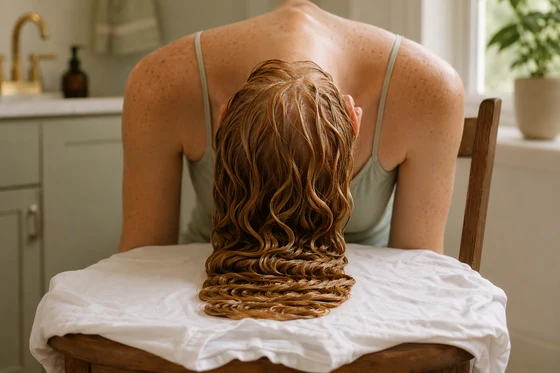
Plopping mechanics, once, precisely. Lay a cotton t-shirt on a chair seat, tip your head forward, and lower your hair straight down onto the fabric so it piles into an accordion of stacked bends. Wrap the shirt’s body over your nape, twist the sleeves back and tie them at your forehead. The point is that the waves dry compressed instead of stretched, and cotton drinks excess water without the rough terry loops that rip open the cuticle surface and start frizz. Ten to twenty minutes for waves; the overnight plop is a curly technique that flattens and creases a 2 pattern.
Diffuse or air dry: the actual trade. A styled shape sets as water leaves and hydrogen bonds re-form in the new position [5]. Air drying is gentle and free, but during those slow hours the water-heavy hair hangs at maximum weight, stretching the bend it is trying to set. Diffusing sets the bonds before gravity wins, at a cost: $0 in product, 15 minutes of arm work, and a little heat exposure, manageable on low. The wavier and heavier your hair, the more diffusing pays.
What order do wavy hair products go in?
The searched question is about product order, but the honest answer is that on wavy hair, water content at application matters more than sequence. Styler applied to soaking wet, drip-off-the-ends hair spreads evenly because water is the delivery medium; the same styler on towel-damp hair sits patchily where your hands happened to land, and no ordering fixes that.
The full order, for the maximal wavy routine, which is still short:
- In the shower: shampoo the scalp, condition mid-lengths and ends, finger-detangle under the conditioner, rinse mostly out.
- On soaking wet hair: optional light leave-in, ends only, 2C and coarse 2B heads only.
- Styler: one gel or mousse, raked through then scrunched upward. This is the load-bearing step.
- Water management: scrunch out drips with cupped hands or the t-shirt, plop if you plop.
- Dry: hands off until 100 percent dry. Touching half-dry waves is how frizz is manufactured at home.
- Scrunch out the crunch: once fully dry, scrunch the hardened gel cast with a drop of nothing, or a single drop of lightweight oil in dry climates. The crunch is not a mistake; it is the styler doing its job until the moment you break it.
What is deliberately absent: curl creams, butters, mousse-plus-cream-plus-gel cocktails, and daily oils. Every added layer is weight, and weight is the one tax a wave cannot pay. If a product does not visibly improve the result within two wash days, it is furniture.
Does your haircut decide whether your waves show up?
Substantially, yes. A wave is a spring under load, and the load is the hair hanging below it. Cut the load and the spring lifts; grow the load and the same head reads straight. This is why waves “appear” after a big chop and why one-length hair past the shoulder blades is where 2A and 2B patterns go to disappear.
The working rules:
- Waves need layers to spring. Internal layers remove hanging weight so the mid-length bends can lift. For 2B and 2C with medium or high density, long internal layers starting at or below the chin are the standard prescription, and the currently popular butterfly haircut is essentially this idea productized for thick hair.
- Fine or low-density waves need restrained layers. Layering spends perimeter density, and fine hair has none to spare; the mechanics are covered in our guide to hairstyles for thin hair. For fine 2A, a blunt-ish cut between jaw and collarbone often beats layering: short enough that weight cannot flatten the bend, blunt enough that the ends still look populated.
- The wavy sweet spot is jaw to collarbone. Short enough to unload the spring, long enough for two full S-bends, which is what reads as “wavy” rather than “flippy.” A wave-friendly bob lives here; see bob haircuts compared for how the lengths and shapes trade off.
- Waves shrink when they spring. A weight-removing cut on wavy hair rises 2 to 5 centimeters once the pattern lifts. Any stylist cutting waves should account for it, and cutting dry, or at least finishing dry, is the reliable way to see it happen.
The screenshot script: “My hair dries with an S-wave but the weight pulls it straight. I want internal layers to remove weight so the wave springs, the shortest layer no shorter than my chin, and a perimeter that still looks solid. Please account for the hair sitting 2 to 5 centimeters shorter once the wave lifts, and check the shape dry before I leave.”
If you are still deciding between lengths and shapes, our what haircut should I get walkthrough covers the face-shape and lifestyle inputs that sit alongside texture.
Why does humidity turn waves into frizz?
Because hair is hygroscopic and your style is written in erasable ink. The keratin in each fiber holds its styled shape largely through hydrogen bonds, which water breaks and re-forms constantly. Hair’s equilibrium water content roughly doubles across the everyday humidity range, from about 6 percent of fiber weight in dry air near 30 percent relative humidity to around 13 to 14 percent at 70 percent [5]. Sorption studies show the fiber takes up water rapidly at the surface, with the interior structure opening to accommodate more water as humidity climbs past roughly 30 percent relative humidity [2]. All of that is research-backed fiber physics, and it has a direct styling consequence: every fiber in humid air is quietly re-deciding its shape, and each one relaxes toward its own natural bend at its own speed. On wavy heads, where fibers already disagree about their pattern, that individualism is exactly what frizz is: a halo of strands that finished the argument early.
It also explains the days your “waves went straight by noon”: water uptake adds weight while the re-forming bonds abandon your styled bend. Humidity does not only frizz waves; it can dissolve them.
What actually helps, ranked by mechanism:
- A gel cast. A film of hardened styler around each wave clump slows water exchange with the air and physically splints the shape. This is why gel beats cream on waves in humid weather, and why breaking the cast too enthusiastically costs hold.
- Complete drying before going outside. Hair that leaves the house damp finishes drying at the ambient humidity, in the ambient shape, meaning its own.
- Film-forming ingredients. Non-water-soluble silicones and polymer film-formers slow moisture movement into the fiber [4]. They work; the only cost is that they eventually require an actual cleanser to remove, which your wavy routine, having kept shampoo, already handles.
The glycerin question, answered honestly. Glycerin is a genuine humectant: it binds water strongly, and pure glycerin will absorb its own weight in water from humid air over days [3]. Curly-forum convention builds a whole calendar on this, avoid glycerin above and below certain dew points, on the logic that in very humid air glycerin pulls water in and swells frizz, and in very dry air it surrenders water and parches hair. The direction of the mechanism is sound, glycerin’s water uptake and release genuinely track ambient humidity [3], but the hair-specific rule is extrapolated: glycerin in a rinse-off or a diluted styler behaves nothing like the pure liquid, and no controlled trial has tested dew-point thresholds on hair. Treat it as mixed evidence: a plausible reason to prefer low-glycerin stylers on extreme days, not a law that requires checking a weather app before touching a product.
The bottom line
Wavy hair fails on borrowed routines and works on its own. Establish the type once with the untouched wet test, place yourself on the 2A to 2C spectrum by where the bend starts, and run the four-move minimum: scheduled shampoo, one styler on soaking wet hair, a gentle set, hands off until dry. Keep the curly world’s techniques and refuse its product load, and let your cut do half the work by unloading the spring. The whole system costs one or two products and under 15 minutes on wash day, which is the point: a wave is not a failed curl to be corrected, it is a pattern to stop interrupting.
Frequently asked questions
How do I know if my hair is wavy or curly?
Run the wet test: wash your hair, apply no product, do not touch it, and let it air dry completely. If it dries into S-shaped bends that do not complete a full loop, it is wavy. If sections wrap all the way around into springs or ringlets, it is curly. Handling wet hair or adding product corrupts the result, so keep your hands off until it is fully dry.
Is 2A hair actually wavy or just messy straight hair?
2A is a real wave pattern: a loose, stretched S that starts around mid-length while the root section lies flat. It is genuinely wavy, but it sits so close to straight that any weight, from long one-length cuts to heavy creams, pulls it flat. That is why 2A responds to almost nothing except light products and weight-removing cuts, and why its owners often believe they have straight hair.
Does the curly girl method work for wavy hair?
At full strength, usually not. The method was built for genuinely curly and coily hair, which is drier and can absorb leave-in conditioners, creams and butters. Waves have less curvature, so scalp oils travel down the fiber more easily and heavy products stack on top, stretching the pattern out. Keep the useful techniques, scrunching, gel casts and diffusing, but keep shampoo and drop the layered leave-ins.
How often should you wash wavy hair?
Every 2 to 4 days for most wavy heads: 2 to 3 days for fine 2A hair that shows oil fast, 3 to 4 days for 2B and 2C. Waves sit in a middle zone where scalp oil still travels down the strand, so skipping shampoo entirely leads to limp roots and buildup rather than better definition. Use a mild shampoo and condition mid-lengths and ends only.
Should wavy hair be diffused or air dried?
Both work, and they trade time against definition. Air drying is free and gentle but slow, and gravity stretches the wave while it dries, which costs 2A and 2B hair some spring. Diffusing on low heat and low airflow sets the pattern before weight pulls it out, adds root volume and cuts drying to 15 to 25 minutes. If your waves collapse by mid-morning, diffusing is usually the fix.
What is plopping and how long should you plop wavy hair?
Plopping is resting your wet, product-loaded hair in an accordion pile on a cotton t-shirt or microfiber towel, then wrapping it so the waves dry in a compressed stack instead of hanging straight. For wavy hair, 10 to 20 minutes is enough; overnight plopping is a curly-hair habit that leaves waves flat and creased. It removes excess water without the frizz that terry-cloth rubbing creates.
In what order should wavy hair products be applied?
Fewer steps than curly routines: on soaking wet hair, an optional light leave-in first, then one styler, gel or mousse, scrunched upward toward the scalp. Water is the carrier, so application on dripping hair distributes styler far better than on damp hair. Once the hair is completely dry, scrunch again to break the gel cast. Most wavy hair does not need oils or creams on top.
Why does wavy hair get frizzy in humidity?
Hair is hygroscopic: its water content roughly doubles between dry and humid air, and incoming water molecules break and re-form the hydrogen bonds that hold your styled shape. Each fiber then relaxes toward its own natural bend at its own rate, and the halo of dissenting strands is what reads as frizz. A gel cast slows the water exchange, which is why gel outperforms creams on waves in humid weather.
- De la Mettrie R, Saint-Leger D, Loussouarn G, et al. Shape Variability and Classification of Human Hair: A Worldwide Approach. Human Biology. 2007;79(3):265-281.
- Breakspear S, et al. The Kinetics of Moisture Sorption by Hair. International Journal of Cosmetic Science. 2025;47(2):270-280.
- Chen HJ, et al. Moisture Retention of Glycerin Solutions with Various Concentrations: A Comparative Study. Scientific Reports. 2022;12:10232.
- D'Souza P, Rathi SK. Shampoo and Conditioners: What a Dermatologist Should Know? Indian Journal of Dermatology. 2015;60(3):248-254.
- Wong M. Hair Frizz Science: Water and Hydrogen Bonds. Lab Muffin Beauty Science. 2019.
- Andre Walker Hair Typing System. Wikipedia.