Tools and try-ons
What Haircut Should I Get? The 7-Question Decision Guide
The right haircut falls out of seven questions: your face shape, your hair's texture, its density, its growth patterns, the minutes you will genuinely spend styling, the trim schedule you will genuinely keep, and how much change you actually want. Answer them in order and the field narrows itself from hundreds of cuts to two or three. This guide is that walkthrough, no photos required until the very end.

“What haircut should I get” feels like one enormous question, which is why it usually ends in an hour of scrolling photos of other people’s hair. It is actually seven small questions, and each one you answer eliminates most of what is left. Face shape, texture, density, growth patterns, styling minutes, maintenance interval, change appetite: answer them in order and you arrive at two or three cut families before you ever open a photo app. This guide is the walkthrough. There is no quiz widget to click through; you answer each question in your head, in about thirty seconds each, and carry a running shortlist from section to section. Ten minutes from now you will have a specific brief to bring to a stylist instead of a vague hope.
One framing note before question one. The early questions describe what different cuts will do on your head. The late questions describe what you will do with the cut. Both halves matter equally, and most haircut regret comes from answering only the first half.
Question 1: What is your face shape?
Answer it in 30 seconds. Hair back, mirror, straight on. Compare the length of your face to its width at the cheekbones, then trace your jaw with a finger. Length and width near equal with a curved jaw is round. Clearly longer than wide is oval or oblong. A hard corner at the jaw with similar width at forehead, cheeks, and jaw is square. That rough sort is all this question needs.
What it rules in and out. Face shape does not veto any cut. What it does is set which lines a cut will emphasize: length past the chin and height at the crown extend a face’s vertical axis, weight at cheek or jaw level widens it, diagonals like side parts and angled bobs break symmetry. The pairing conventions built on those mechanics, round faces with elongating cuts, square jaws with softened perimeters, are convention from cosmetology training rather than tested findings [5], so treat them as defaults you may overrule, not laws. The compressed version: know which axis your face already leads with, and decide whether you want the cut to repeat it or counter it.
That is one paragraph doing the work of three articles, so if face shape is your open question, take the deep dives: our guides to hairstyles for round faces, hairstyles for square faces, and hairstyles for oval faces run the full logic shape by shape, and the by-face-shape hub covers the rest. Then come back; six questions remain.
Question 2: What is your hair’s texture?
Answer it in 30 seconds. Look at a strand air-dried with no product. Straight, wavy, curly, or coily. If wash-day hair dries with a bend that brushing removes, you are wavy. If it dries into springs, you are curly or coily depending on how tight the spring is.
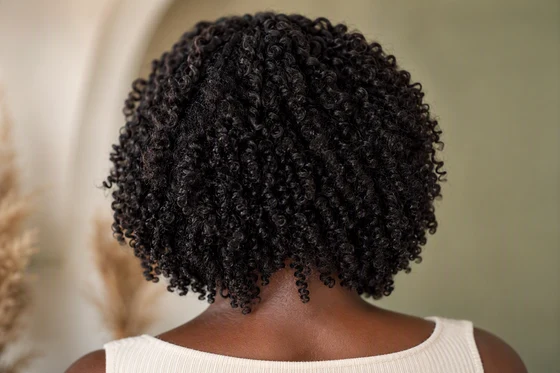
What it rules in and out. Texture decides which cuts your hair will do for free and which it will fight every morning. Straight hair holds precise lines, blunt bobs, sharp fringes, but will not hold volume or curl without heat. Wavy hair suits layered, textured families, shags, lobs with movement, and resists geometric precision: a blunt line cut into wavy hair reappears as an uneven line by lunchtime. Curly and coily hair carry volume and shape structurally, which makes layered and rounded cuts thrive, but shrinkage changes the math: a curl can dry to half its stretched length or less, which is research-backed fiber mechanics [4], so any target length must be planned dry, not wet. Strand thickness varies widely between people too, roughly 50 to 100 microns across populations [2], which is why the same cut photographs differently on two heads with the same texture label.
The elimination rule is simple: strike any cut family whose signature look requires your hair to be a different texture daily. Straightening curly hair for a blunt bob, or curling straight hair for a shag, is not a haircut, it is a recurring appointment with yourself, and it belongs in the styling-minutes budget of question five.
Question 3: How dense is your hair, and which way is that moving?
Answer it in 30 seconds. Ponytail test: gather your hair and look at the circumference. Thick, medium, or thin is judgment enough. Then the second half, which most guides skip: is that answer the same as five years ago? Strand diameter and overall density shift over time for most people, and gray strands often come in coarser or differently textured than the pigmented hair they replace.
What it rules in and out. High density supports weight and length; one-length long hair, heavy bobs, and dense fringes all need enough hair to fill them out. Lower density favors cuts that build shape from structure instead of mass: shorter perimeters, strategic layers that lift roots, blunt-cut ends that make the hairline of the cut read full. A long one-length cut on fine, low-density hair tapers into transparency at the ends, which is the single most common mismatch stylists correct.
If the second half of your answer was “it is changing,” that trend line matters more than the snapshot, because you are choosing a cut you will wear into the trend. This is the axis where our age-band guides earn their place: hairstyles for women over 40 and hairstyles for women over 50 are really density-and-texture-transition guides wearing a demographic title, and they cover the adjustment logic in full. To be clear about what this question is not: it is not an age rule. The input is what your hair is doing, never the number.
Question 4: What are your growth patterns doing?
Answer it in 30 seconds. Three checks on dry, unstyled hair. Where does your part fall when you shake your head and let hair settle? Is there a cowlick at the crown or in the fringe zone, a spot where hair spirals or stands against the grain? And what is your hairline doing at the temples and forehead: straight, widow’s peak, high, or uneven?
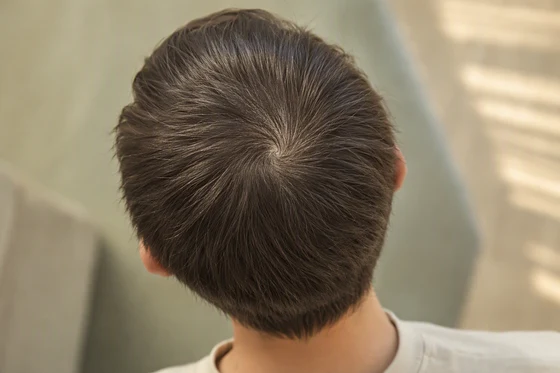
What it rules in and out. This is the question photos leave out, and it is why a cut that looks effortless on someone else can need twenty minutes on you. Hair grows in a direction, and cuts that work with the direction lie down on their own; cuts that work against it need daily persuasion. A strong crown cowlick argues against very short crops that depend on hair lying flat, and argues for cuts with enough length or texture at the crown to absorb the spiral. A natural side part resists being moved to the middle: it will creep back all day. Fringe is the most pattern-sensitive decision of all: a cowlick or widow’s peak in the fringe zone splits straight-across bangs down the middle, while curtain and side-swept styles absorb the same pattern gracefully.
Nothing here is an absolute veto. Every pattern can be overridden with heat and product. The honest move is to file each override under question five, where it costs minutes, rather than pretending the photo will happen on its own.
Question 5: How many minutes will you actually style it?
Answer it in 30 seconds. Not your aspiration. Count what you did this morning and most mornings this month: zero, five, fifteen, or thirty-plus.
What it rules in and out. More shortlists die here than anywhere else, and they deserve to. Every cut has a styling floor, the minimum daily input below which it stops looking intentional. Wash-and-go floors: cuts built on your natural texture, curly shapes cut dry, textured pixies, true one-length cuts on straight hair. Five-minute floors: lobs and long layers that need a quick dry and a product pass. Fifteen-plus floors: precision bobs on wavy hair, smooth blowout-dependent styles, straight fringes on hair with any bend, anything from question four’s override file.
Match the floor to your real number and the cut looks good on an ordinary Tuesday, which is the only day that counts, because you have five of them for every event. Choose a cut whose floor is above your real number and you have bought a photograph of someone else’s routine.
Question 6: How long can you go between salon visits?
Answer it in 30 seconds. Look at your calendar history, not your intentions. When was your last appointment, and the one before that? Every four to six weeks, every eight to ten, or twice a year?
What it rules in and out. Cuts age at different speeds, and the trim cadences by family are stable convention across the trade [5]: pixies and short crops hold their shape four to six weeks; bobs, lobs, and structured fringes six to eight; layered mid-lengths eight to twelve; long low-layer cuts can stretch past twelve and merely soften. The mechanism is arithmetic, not opinion: scalp hair grows roughly 1 to 1.5 centimeters a month, which is research-backed across large multi-population measurement studies [1][2][3]. A centimeter is a rounding error on hair that reaches your shoulder blades and a third of the entire cut on a five-centimeter pixie. The shorter and sharper the cut, the larger each month of growth is as a fraction of its shape.
So the rule: your cut’s trim cadence must match your demonstrated salon habit, not your intended one. A twice-a-year visitor wearing a pixie spends most of the year wearing the grow-out, not the cut.
Question 7: How much change do you actually want?
Answer it in 30 seconds. Evolution or transformation? Evolution keeps your silhouette and adjusts it: layers, fringe, a few centimeters, a new part. Transformation changes what you see in the mirror: long to short, blunt to shag, straight-line to curly-embraced.
What it rules in and out. This question does not narrow the field so much as set the stakes on it, using the same growth number as question six. Change is cheap in one direction and expensive in the other: any cut can be made shorter next month, but restoring length runs at that same centimeter or so per month [1][3]. Trimming a lob to a bob is a two-month decision; going from mid-back length to a pixie is a two-to-three-year decision if you change your mind. That asymmetry is the reversibility math, and it suggests a simple protocol for transformers: move in stages when the stages are cheap. Long to lob, live with it a month, lob to bob, then decide about shorter. You lose a little drama and buy back years of potential regret. Evolvers can skip the protocol; their whole category is reversible inside a season.
Neither answer is the wise one. Wanting transformation is as legitimate as wanting a trim. The only mistake is pricing the decision at the wrong number of months.
Putting the seven answers together
No table can hold every combination, but most readers land in one of these rows. Find the row nearest your answers and you have your shortlist of cut families to research, not a verdict.
| Your answers, roughly | Shortlist these cut families |
|---|---|
| Any face shape · straight or wavy · medium-high density · low styling minutes · 8+ week salon gap | Long layers, lob with soft layers, one-length with face frame |
| Round or square face · any texture · medium density · 5-15 styling minutes · 6-8 week gap | Angled or A-line bob, layered lob, curtain-bang mid-length |
| Curly or coily · any face shape · any density · wash-and-go minutes | Dry-cut layered curly shape, rounded mid-length, curly shag |
| Fine or thinning density · straight or wavy · low minutes · 6-8 week gap | Blunt bob at chin to collarbone, textured lob, soft pixie with crown length |
| Any shape · wavy · 5-15 minutes · likes visible texture · 8-12 week gap | Shag, mixie, heavily layered mid-length |
| Transformation appetite · crown cowlick or strong part · 4-6 week gap you will truly keep | Textured pixie or crop with length at the crown, staged via bob first |
Two or three families, not one cut, is the correct resolution to leave this page with. The final narrowing, exact length, layer map, fringe or none, belongs to a conversation with someone who can see your growth patterns from behind.
Taking your answer to the stylist
Your seven answers compress into a brief a stylist can actually use: “shoulder-length with layers, my hair is wavy and fine and I style it five minutes a day, I come in every two months, and I want evolution, not transformation.” That sentence does more work than thirty saved photos, because it hands over your budgets, the things a stylist cannot see, and invites their expertise on the things they can. Expect pushback on questions two through four; that is the consultation working, not failing.
Before you book, take ten minutes with our salon consultation checklist. It turns this article’s output into the exact phrases to say in the chair, the questions to ask back, and the photo-selection rules from the FAQ below, and it is the single highest-leverage step between reading and getting the cut you described.
Where to go from here
If you want to see a shortlisted cut on your own face before committing, our review of AI hairstyle try-on tools covers which previews are realistic enough to be useful and which flatter you into a mistake. And this walkthrough lives alongside the rest of our decision guides in the tools hub, including the face-shape deep dives from question one if you skipped past them.
The seven questions do not expire. Texture, density, and your styling budget all drift over the years, so when the current cut stops earning its minutes, run the walkthrough again. It gets faster every time, because the questions stay the same and only the answers move.
Frequently asked questions
How do I pick between two cuts that both fit my answers?
Run the tiebreakers in order. First, reversibility: if one cut can grow into the other but not the reverse, take the longer one, because you can always cut more and never cut less. Second, styling floor: pick the cut that still looks intentional on a zero-effort morning, since you will have many of those. Third, trim cadence: the cut whose maintenance interval matches your real salon habit wins. If they are still tied, they are close enough that either is a good decision, so stop deliberating and book.
Should I bring photos to the salon?
Yes, but bring the right kind. Bring two or three photos of the same cut on different people, ideally at least one on hair with your texture and density, so the stylist can read the cut rather than the model. A photo of one cut on one heavily styled, heavily lit head tells the stylist almost nothing about what you want. Also useful: a photo of your own hair on a day you liked it, which shows your real texture better than any words.
How much should I change in one appointment?
One major variable at a time is the low-regret rule. Length, shape, and color are three separate decisions; changing all three in one sitting means that if you dislike the result, you cannot tell which change caused it. If you are moving from long one-length hair toward a short textured cut, an intermediate stop at a lob or bob costs one extra appointment and lets you test the shorter frame before committing the final inches.
What if I regret the cut?
Do the growth math before you sit down, not after. Scalp hair grows roughly 1 to 1.5 centimeters a month, call it a centimeter for planning. Regretting two centimeters of trimmed length costs you about two months; regretting a pixie when you wanted shoulder-length hair costs two years or more. That number is the real price of the decision, so scale your caution to it: be quick about trims and layer adjustments, and deliberate about anything that removes more than a hand's width.
Does my age matter for choosing a haircut?
Your age is not an input; what your hair is doing is. Strand diameter, density, and texture shift over time, gray hair often behaves differently from pigmented hair, and those changes genuinely affect which cuts hold their shape. So answer the seven questions with your current hair, not the hair you had at 25, and ignore any rule phrased as an age limit. There is no cut you age out of, only cuts your current hair supports better or worse.
How do cowlicks and my natural part affect the choice?
They set the direction your hair wants to fall, and a cut that fights them needs daily styling to hold. A crown cowlick pushes hair up or sideways at the exact spot short cuts need to lie flat, a strong natural part resists being moved more than a couple of centimeters, and a widow's peak or high hairline changes how fringe sits. None of these rules a cut out absolutely, but each one moves that cut from the low-effort column to the high-effort column, which matters once you reach the styling-minutes question.
How honest do I need to be about styling time?
Completely, because this question eliminates more bad haircuts than any other. Count the minutes you spent on your hair this morning, not the minutes you spend before an event. If the answer is under five, a cut that needs a round brush and fifteen minutes of blow-drying will look unfinished five days out of seven, and you will blame the cut rather than the arithmetic. There are excellent cuts at every effort level; the mistake is choosing from the wrong shelf.
Can my stylist overrule my answers?
They can and sometimes should, on the questions they can see better than you: texture, density, growth patterns, and how a specific cut will behave on your specific head. A stylist who says a photo will not work on your hair and explains why is doing exactly their job. The questions they cannot answer for you are the budget ones: your styling minutes, your trim cadence, and your appetite for change. Bring your answers, listen to their corrections on the mechanics, and hold your ground on the budgets.
What if I have no idea what my face shape is?
Spend one minute on it and move on. Pull your hair back, face a mirror straight on, and compare face length to cheekbone width, then check whether your jaw curves or angles. That sorts most people into round, oval, oblong, or square territory, which is enough resolution for this walkthrough. If you land between two shapes, read both deep-dive guides; the advice overlaps more than the shape names suggest, and face shape is only one question of seven anyway.
- Loussouarn G, et al. Diversity of hair growth profiles. International Journal of Dermatology. 2005;44(Suppl 1):6-9.
- Loussouarn G, et al. Diversity in human hair growth, diameter, colour and shape. An in vivo study on young adults from 24 different ethnic groups observed in the five continents. European Journal of Dermatology. 2016;26(2):144-154.
- Hoover E, Alhajj M, Flores JL. Physiology, Hair. StatPearls, NCBI Bookshelf. Updated 2023.
- Cloete E, Khumalo NP, Ngoepe MN. The what, why and how of curly hair: a review. Proceedings of the Royal Society A. 2019;475(2231):20190516.
- Milady Standard Cosmetology, Principles of Hair Design chapter: cut-family and face-shape styling conventions used across cosmetology training.