Tools and try-ons
How Often Should You Cut Your Hair? By Length, Style, and Goal
Every 4 to 6 weeks for a pixie, 6 to 8 for a bob, 8 to 12 for layered cuts, and 12 to 16 when growing one-length hair, with bangs dusted every 2 to 4 weeks. Trims do not make hair grow faster: growth happens at the follicle under the scalp, so cutting the ends only controls shape and damage. Pick your interval by cut family and goal, holding a shape, growing out, or repairing, not by a universal rule.

“Every six to eight weeks” is the answer most people have heard, and it is wrong as often as it is right. A pixie on that schedule loses its shape for two of every eight weeks; one-length hair being grown out on that schedule donates a third of its new growth back to the scissors. The honest answer is a grid, not a number: your interval depends on which cut family you wear and whether your current goal is holding a shape, gaining length, or repairing damage. This guide gives you that grid, the biology behind it, and the math for what each choice costs per year.
How often should you cut your hair? The full answer by cut and goal
Two facts generate every number in the table below. First, scalp hair grows about half an inch, roughly 1.25 centimeters, per month on average, with real measured variation between individuals and across ancestry groups research-backed [1]. Second, the shorter and sharper a cut is, the larger a fraction of its design that half inch destroys. Half an inch on a 30-inch length is rounding error; half an inch on a 2-inch pixie is a quarter of the entire cut.
The intervals below are stylist convention, the working consensus of the trade rather than the output of controlled trials, but they are consistent across industry sources [5][6] and they follow directly from the growth arithmetic.
| Cut family | Maintain the shape | Growing out | Repairing damage |
|---|---|---|---|
| Pixie and crops | 4-6 weeks | 8-10 weeks, with reshaping cuts, not skipped ones | 4-6 weeks (short hair sheds damage fastest anyway) |
| Bobs (blunt, box, French, Italian) | 6-8 weeks; 4-6 for the sharpest one-length lines | 10-12 weeks, letting the line soften toward a lob | 6-8 weeks |
| Layered mid-length and long cuts | 8-12 weeks | 12-16 weeks with dustings between | 6-8 weeks until ends are clean, then relax |
| One-length long hair | 10-12 weeks | 12-16 weeks, dusting only | 8 weeks, taking slightly more each visit |
| Bangs and fringe | 2-4 weeks (between-appointment dustings) | 4-6 weeks as they merge into layers | Trim with the main schedule |
Read your row, then read your column. A layered cut you love is an 8-to-12-week commitment; the same cut being grown out becomes a 12-to-16-week schedule with a different instruction to your stylist, which the grow-out section below spells out. If you are still choosing the cut itself, start with what haircut should I get and come back here for the maintenance bill.
Do trims make hair grow faster?
No, and the biology is unambiguous. Every strand of hair on your head is produced by a follicle, a small organ seated a few millimeters under the scalp, where cells divide, fill with keratin, and die before the strand ever reaches the surface [2]. The fiber you see and cut is non-living material, as incapable of responding to a haircut as a fingernail is to filing. Growth rate is set at the follicle by the anagen phase of its cycle, which runs for years at a time and is governed by genetics and hormones, not by anything that happens at the ends research-backed [1][2].
Dermatologists make the same point about shaving, the most extreme version of cutting: severing the shaft has no effect on the root, and regrowth speed and thickness are unchanged [4]. Scissors twelve inches from the scalp cannot do what a razor at skin level cannot.
So why does the myth survive every debunking? Because trimmed hair genuinely does end up longer and thicker looking over time, just not for the reason people think. The mechanism is retention, not acceleration. Untrimmed ends split and break, so a strand that grew six inches in a year may only keep four of them. Trimmed hair keeps nearly everything it grows, and freshly cut ends are blunt and full rather than tapered and wispy, so the hair also reads denser [4]. The follicle never sped up; the scissors just stopped the leak at the other end. That distinction matters practically, because it tells you trims are worth exactly as much as your breakage problem and no more. Healthy hair handled gently loses little length to breakage and can safely run long intervals; heat-styled, bleached, or tightly brushed hair loses a lot, and for it, regular trims really do produce measurably longer hair a year later.
One honest caveat: a few small studies on scalp massage and on supplements claim growth-rate effects, and the trade often cites them as evidence that habits change growth speed. The literature there is thin and inconsistent mixed evidence, and none of it involves cutting. On trims specifically, there is no mechanism and no evidence: they act on the ends, and the ends do not talk to the follicle.
Why does waiting too long make everything worse?
The case for trimming on a schedule is not that cutting helps growth; it is that hair cannot heal. A hair fiber has no living cells, no blood supply, and no repair mechanism, so damage only accumulates and only travels in one direction: upward from the tip [2][3].
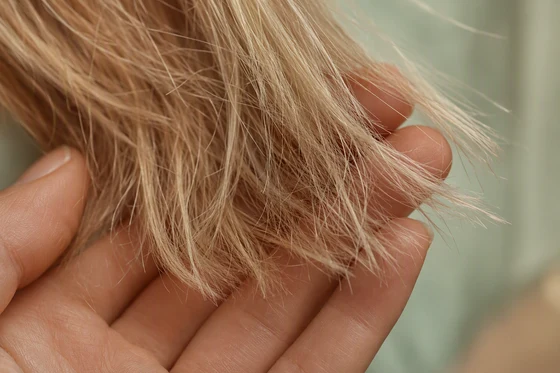
The mechanics run in a fixed sequence. The cuticle, the shingle-like outer layer of overlapping dead cells, is the fiber’s only armor, and daily life sands it away: brushing friction, ponytail elastics, heat styling, UV exposure, and chemical services all lift and chip the shingles in a process the literature calls weathering, a progressive degradation that runs from root to tip and is always worst at the oldest part of the strand, the end [3]. Once the cuticle is stripped, the cortex underneath is exposed, and the fiber frays along its length like a rope losing its whipping: that fray is a split end, and research on grooming damage shows splits form most readily where abrasion combines with the twisting forces of everyday styling research-backed [3].
The compounding step is the one most people miss. A split does not stay at the tip. Each brush stroke levers the two halves apart, so the split migrates up the shaft, sometimes for inches, until the strand simply breaks off at the top of the split. Wait long enough and the damage stops being a tip problem you could dust away and becomes a mid-length problem that only a real cut removes. This is why a year of skipped trims usually ends with a bigger cut than the sum of the trims would have been: the scissors were always going to collect; waiting just let the interest accrue.
This is also where the dusting earns its place. A dusting removes 3 to 6 millimeters, just past the split tips, and it is the correct tool when damage is young and confined to the ends: you cut the fray before it travels, at nearly zero cost in length. It is the wrong tool once splits have migrated, because dusting the tip of a strand that is split two inches up removes nothing that matters. The honest rule: dust early and often when growing out, cut properly when you can see white dots, mid-shaft splits, or a see-through perimeter.
How often should you cut short hair: pixies, bobs, and bangs?
Short cuts sit on the tightest schedules on the grid, and the reason is proportional, not cosmetic fussiness. Half an inch of growth is a fixed monthly deposit; the shorter the cut, the larger the share of the design it overwrites.
Pixies: every 4 to 6 weeks. A pixie’s shape lives in its shortest zones: the neckline, the perimeter around the ears, the graduation through the back. Those areas are often under an inch long, so a month of growth can double them, and the crisp outline goes soft and boxy from the bottom up. Two honest schedule-stretchers exist. Many salons offer neckline and ear cleanups between full cuts, often cheap or free, which holds the frame while the interior grows; and choosing a softer, more textured pixie over a sharp geometric one buys an extra week or two because the grow-out reads as intentional. The full short-cut decision framework, including which pixie and crop shapes forgive growth best, is in our short hairstyles guide.
Bobs: every 6 to 8 weeks, 4 to 6 for the sharpest lines. A bob’s entire design is one weight line at a chosen height, so its trim interval is really a question of how fast that line visibly moves and how hard-edged it is. One-length geometric versions like the box bob show every millimeter and carry the family’s strictest schedule; layered and shaggy versions blur as they grow and stretch to 8 or 10 weeks. The full interval-by-version breakdown is in our bob comparison, which treats upkeep as part of each cut’s price, because it is.
Bangs: every 2 to 4 weeks, as dustings. Fringe is the fastest-expiring purchase in hair. A blunt brow-grazing fringe reaches your lashes in about three weeks at average growth rates, while curtain bangs and long side fringes are engineered to drift and part, so they tolerate 4 to 6 weeks. The industry solution is the between-appointment bang trim: five minutes, dry, frequently free or under $15 at the salon that did the cut. Use it. The script is one line: “Just a bang dusting between appointments, keep the shape exactly as it is.” Cutting your own fringe with kitchen scissors is the most common self-inflicted hair injury for a reason: the tools are wrong, the tension is wrong, and wet hair springs up shorter than it was cut.
How often should you trim when growing your hair out?
Growing out is where the standard advice fails hardest, because the six-to-eight-week reflex quietly cancels the project. Trim half an inch every six weeks against half an inch of monthly growth and you keep about 4 inches of the 6 you grow in a year; stretch to 14 weeks with conservative dustings and you keep well over 5. The schedule is the strategy.
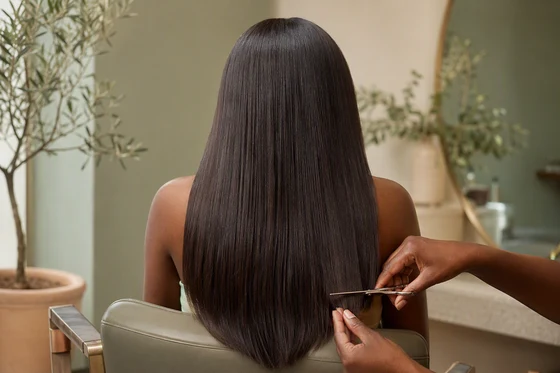
The interval: 12 to 16 weeks for one-length hair, 8 to 12 if you carry layers. One-length hair being grown has no shape to lose, only ends to protect, so the visit exists purely to remove damage before it travels. Layered cuts need the shorter end of the range because layers grown past their design point collapse into stringy, disconnected lengths; the visit reshapes the interior while barely touching the perimeter. If your grow-out passes through the awkward mid-length stage, a transitional shape with long face-framing layers can make the intermediate months wearable without sacrificing the perimeter.
The instruction matters more than the interval. “Just a trim” authorizes whatever your stylist considers a trim, and a well-meaning inch is two months of your project. Say the goal out loud and put a number on it. The script readers screenshot: “I am growing my hair out. Please take off the minimum that keeps the ends healthy, a quarter inch or less, and nothing from the layers unless something is actively damaged. I would rather come back sooner than lose length today.” A good stylist will respect a stated number; a stylist who repeatedly takes more than you authorized is telling you to book elsewhere.
Protect the growth between visits, because retention is the whole game. The trim schedule only preserves length that survives daily handling. The levers with real mechanical rationale: lower heat exposure, since thermal damage degrades the cuticle you are asking to last four months [3]; looser fastenings, because tension and friction at the same point snap fibers; a smoother pillow surface and detangling from the ends up. None of this speeds the follicle; all of it reduces the breakage tax on what the follicle produces.
Know when to abandon the dusting. If the ends go see-through, or white dots and mid-shaft splits appear, the damage has outrun the strategy. Take the real cut, lose the inch, and restart from clean fiber. A grow-out built on broken ends finishes later than one that took an honest correction early.
Does hair type change the schedule: fine, curly, or damaged hair?
Cut family sets the base interval; fiber type adjusts it.
Fine hair: shorten every interval by a notch. Fine strands have a smaller diameter, so the same weathering removes a larger fraction of each fiber, and a tapered, worn perimeter is exactly what fine hair cannot afford: density at the ends is the whole visual argument. Six to eight weeks holds a blunt line at its thickest-looking, and blunt, frequently refreshed ends are the cheapest fullness available, cheaper than any product. The full density playbook, including which cuts spend fine hair’s budget wisely, is in our thin hair guide.
Curly and coily hair: lengthen the interval, upgrade the appointment. Curl hides growth inside shrinkage, so shape drifts slowly and 8 to 12 weeks is the working convention [5]. But curly hair trades frequency for precision: many stylists cut curl dry, curl by curl, because wet-stretched cutting misjudges where each spiral will sit, and a bad curl cut takes months to grow past. Fewer visits, better ones. The caveat is damage detection: shrinkage hides split ends as effectively as it hides growth, so inspect your own ends monthly rather than waiting for the mirror to complain.
Damaged hair: repair is a schedule, not a haircut. Bleach, relaxers, and daily heat produce damage that extends well above the tips, and no single cut short of drastic removes it all. The working protocol is incremental: a cut every 6 to 8 weeks that takes slightly more than your growth, half an inch to an inch, so each visit nets out a little more damaged fiber while total length holds or drifts slowly shorter. Over six to nine months you replace the compromised ends with intact fiber without ever losing visible length in one sitting. Pair the schedule with cause-removal, because trimming damage you are actively re-creating is a subscription with no end date. If the damage source is color, a lower-touch technique can cut both the harm and the salon bill at once: see low-maintenance color.
What does your trim schedule cost per year?
Trim intervals are annual bills in disguise, and you should read them that way before choosing a cut. Using a US mid-range salon price of $50 to $110 per cut, more in major metros, the arithmetic per cut family:
| Cut family | Interval | Visits per year | Annual cost range |
|---|---|---|---|
| Pixie | 4-6 weeks | 9-13 | $450-$1,430 |
| Sharp one-length bob | 4-6 weeks | 9-13 | $450-$1,430 |
| Softer bob or lob | 6-8 weeks | 6-9 | $300-$990 |
| Layered mid-length or long | 8-12 weeks | 4-7 | $200-$770 |
| One-length grow-out | 12-16 weeks | 3-4 | $150-$440 |
| Bangs (add-on dustings) | 2-4 weeks | 12-20 | $0-$300 |
Three honest notes on the table. The cheapest schedules belong to the longest, softest cuts, which is why “low maintenance” and “long with layers” are nearly synonyms in salon vocabulary. The most expensive row is not a luxury tax but a physics tax: short, sharp designs are simply destroyed faster by the same half inch of growth. And the ranges assume cuts only; color multiplies the bill on its own schedule, and if you run both, aligning the two calendars, cut and color in one visit, saves real money and time. Our bob comparison and short hairstyles guide both carry per-cut upkeep notes so you can price a specific shape before you sit down.
How do you stretch an interval honestly?
Every interval on the grid can be stretched, but only by changing the inputs, not by wishing. These are the levers that actually move the number, in descending order of effect.
Choose a cut that ages well. This is the biggest lever and it is decided in the chair, not the bathroom. Soft perimeters, internal layers, and textured finishes blur as they grow; hard lines and precision graduation expire visibly. Asking your stylist “cut this so it grows out well” is a legitimate, answerable request: it means keeping weight lines soft and avoiding designs whose entire identity is one crisp edge.
Use the salon’s small services. Neckline cleanups, bang dustings, and quick perimeter checks between full cuts exist precisely to extend the expensive appointment. They cost a fraction of a full cut and hold the two zones, frame and fringe, where grow-out shows first.
Reduce the damage rate. The interval on the repair column is set by how fast you create splits. Less direct heat, heat protection when you do style, looser elastics, and detangling from the ends up all slow the weathering process the trim exists to correct [3], which converts directly into weeks. This is the mechanism behind every “my hair got healthier when I did less to it” story: less input damage, longer honest intervals.
Do not stretch by ignoring evidence. White dots at the tips, ends that snag on fingers, a perimeter going translucent: these are the fiber telling you the interval is over regardless of the calendar. Stretching past visible damage is not saving money; it is borrowing against a larger cut with compounding interest, because splits keep traveling while you wait.
Skip the products that promise to replace trims. Split-end “repair” serums bind frayed ends temporarily and make them look sealed until the next wash; the underlying fiber remains broken, because no cosmetic rebuilds a split cortex [3]. They are legitimate as a photo-day cosmetic, not as a schedule extension.
The bottom line
Trim frequency is a design decision, not a virtue: 4 to 6 weeks for pixies, 6 to 8 for bobs, 8 to 12 for layers, 12 to 16 when growing one-length hair, and bang dustings every 2 to 4 weeks in between. Cutting the ends never speeds the follicle, so trims buy shape and length retention, nothing else, and the myth can stay retired. Match the interval to your current goal, say the actual number to your stylist, and price the schedule before you choose the cut, because the calendar is part of the haircut. Hair cannot repair itself, so the only real choice is whether the scissors collect a little on your schedule or a lot on theirs.
Frequently asked questions
Do trims make your hair grow faster?
No. Hair grows from the follicle, a structure under the scalp, and the visible strand is non-living keratin, so cutting the ends cannot signal the root to speed up. The myth persists because trimmed hair looks thicker at the ends and breaks less, so more of the growth you produce actually survives to full length. Trims help you retain length; they do not create it.
How often should you trim your hair when growing it out?
Every 12 to 16 weeks for one-length hair, every 8 to 12 if you carry layers, and ask for a dusting rather than a trim: 3 to 6 millimeters off, just past the split tips. At an average growth rate of roughly half an inch a month you bank 1 to 1.5 inches of net length between visits on that schedule. Skipping trims entirely usually backfires, because splits travel upward and force a bigger cut later.
How often should you cut a bob?
Every 6 to 8 weeks for most bobs, and every 4 to 6 for the sharpest one-length versions like the box bob and blunt bob, because a single hard perimeter line shows every week of growth. Softer layered and shaggy bobs stretch to 8 or even 10 weeks because they blur as they grow instead of losing their design.
How often should you cut a pixie?
Every 4 to 6 weeks. A pixie is mostly built from hair under three inches long, so half an inch of monthly growth is a 15 to 25 percent change in the cut's proportions, and the shape around the ears and neckline disappears first. Many salons offer cheaper neckline and ear cleanups between full cuts, which can push the full-cut interval toward 6 to 8 weeks.
How often should you trim bangs?
Every 2 to 4 weeks, depending on how precise the style is. A full blunt fringe crosses from brow-grazing to eye-poking in about three weeks at average growth rates, while curtain bangs and long side fringes tolerate 4 to 6 weeks because they are designed to part and drift. Most salons offer free or low-cost bang trims between appointments, so ask rather than cutting them yourself.
How often should you cut fine hair?
Every 6 to 8 weeks, slightly more often than the same cut on thicker hair. Fine strands have a smaller diameter, so wear at the ends removes a larger fraction of each fiber and the perimeter visibly thins sooner. Keeping the ends blunt and fresh is the cheapest density trick available for fine hair, which is why stylists put fine-haired clients on the shorter end of every interval.
What is a hair dusting, and when is it better than a trim?
A dusting removes 3 to 6 millimeters, essentially just the split tips, while a standard trim takes half an inch to an inch or more. Dusting is the right tool when your goal is length retention: you clear the damage that would otherwise travel up the strand while keeping nearly all your growth. It is the wrong tool when the shape has grown out or damage extends past the tips, because removing too little just delays a bigger cut.
What happens if you do not cut your hair for a year?
You gain roughly 5 to 7 inches of new growth, but the oldest ends accumulate a year of friction, heat, and chemical wear with no removal of damage. Split ends that start at the tip propagate up the shaft, so by month twelve many strands break above the split rather than at it, and the perimeter thins into an uneven taper. Hair fibers cannot self-repair, so the eventual corrective cut is usually larger than the sum of the trims you skipped.
How much hair should a trim take off?
A quarter inch to half an inch for maintenance if you trim on schedule, because that matches roughly one interval of growth plus the worn tips. If it has been four months or more, expect your stylist to recommend an inch or two: damage has climbed higher than the tip, and cutting into intact fiber is the only way to get a clean, durable end. Ask to see the amount pinched between their fingers before the first cut.
- Loussouarn G, El Rawadi C, Genain G. Diversity of hair growth profiles. International Journal of Dermatology. 2005;44 Suppl 1:6-9.
- Paus R, Cotsarelis G. The Biology of Hair Follicles. New England Journal of Medicine. 1999;341(7):491-497.
- Gavazzoni Dias MF. Hair Cosmetics: An Overview. International Journal of Trichology. 2015;7(1):2-15.
- Bullock J. Will Shaving Make Your Hair Grow Back Thicker? Cleveland Clinic Health Essentials. 2023.
- Healthline editorial team. How Often Should You Cut Your Hair? Healthline. 2020.
- Hair Cuttery editorial team. How Often Should You Get Your Hair Cut: A Simple Guide. HairCuttery.com. 2024.