Cuts by face shape
French Bob, Italian Bob, Box Bob: Every Bob Worth Getting, Compared
A bob is any cut whose weight sits in one perimeter line between the jaw and the collarbone; the named versions differ mainly in length, fringe, and how much layering softens that line. The French bob is the shortest and usually fringed, the Italian bob is jaw-to-chin with root volume, the box bob is one length with zero layers, and the layered, A-line and shaggy versions redistribute the weight for movement. Every one of them needs a trim every 4 to 8 weeks to hold its shape.
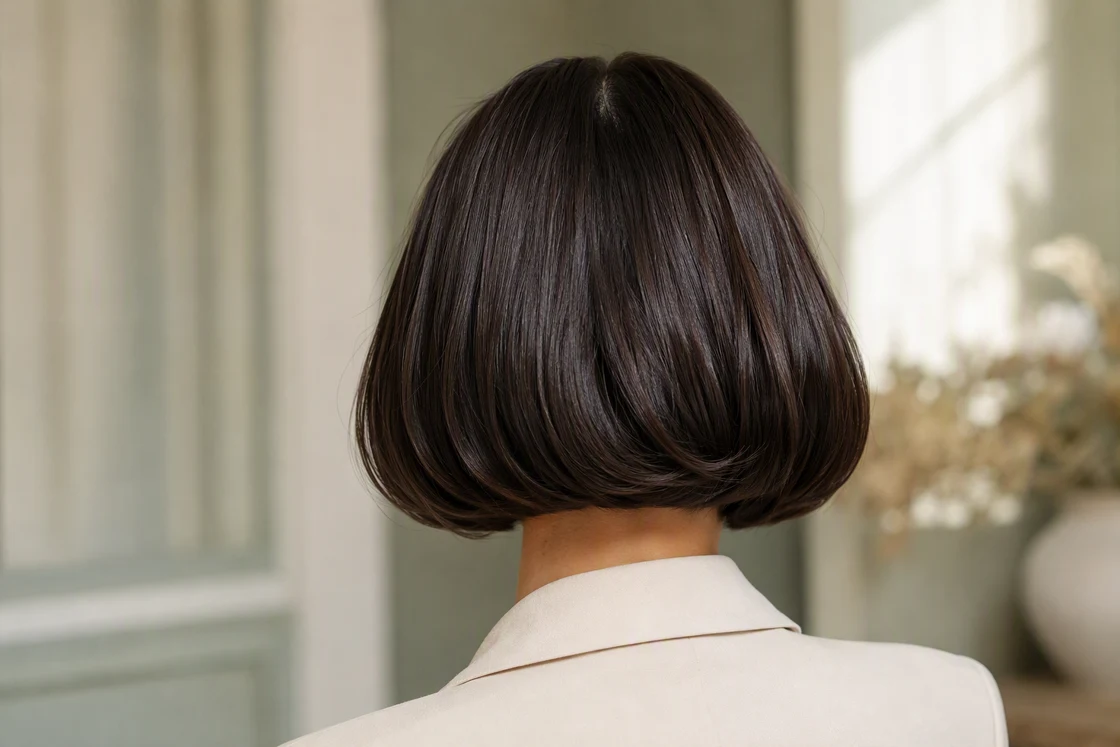
The bob is the dominant cut family of 2026: trend coverage this year is less “should you get a bob” and more a taxonomy of which one [1][2]. That taxonomy is the problem. French, Italian, box, blunt, layered, lob, A-line, shaggy: the names multiply faster than the definitions, most articles cover exactly one, and stylists themselves disagree at the margins. This guide puts every bob worth getting side by side, with exact lengths, fringe rules, weight-line behavior, hair-type fit, honest upkeep numbers, and the precise words to say in the chair.
What actually makes a bob a bob?
Strip the names away and every bob is the same machine: a cut whose weight is concentrated in one visible perimeter line somewhere between the jaw and the collarbone. That line is called the weight line, and it is the single most important concept on this page. Everything the named variants do, they do by moving that line up or down, keeping it hard or softening it, and adding or removing the layers above it.
Three consequences follow from the mechanics, and they explain almost every difference in the table below.
A hard line reads dense. When every strand ends at the same length, the perimeter is as thick as your hair can physically look, because nothing has been thinned away above it. This is why blunt bobs are the standing recommendation for fine hair and why heavily layered ones are not.
A hard line shows growth. The same precision that makes a blunt bob look expensive makes it perishable. Hair grows roughly half an inch a month, and on a cut whose entire design is one line, half an inch is visible. Softer, layered versions blur as they grow; geometric ones just stop being the cut you asked for.
Layers trade density for movement. Every layer cut above the perimeter removes weight from the ends and puts spring into the lengths. On thick or wavy hair that trade is the whole point; on fine hair it can spend density the hair cannot afford.
Hold those three trades in mind and the eight named bobs stop being a fashion vocabulary and become a menu of positions on two dials: where the line sits, and how soft it is.
How do the bobs compare at a glance?
| Bob | Length | Fringe | Weight line and layering | Best hair types | Face-shape convention | Daily styling | Trim interval |
|---|---|---|---|---|---|---|---|
| French bob | Cheekbone to chin | Usually yes, soft and choppy | Blunt-to-texturized perimeter, minimal layers | Fine to medium, straight or loose wave | Oval, square; shortest versions sit at cheek level, the line round-face convention avoids | 5-10 min | 5-7 weeks |
| Italian bob | Jaw to just below chin | Usually no | Blunt perimeter, minimal internal layering, volume at the root | Medium to thick, straight to wavy | Round, oval, oblong; volume adds width | 10-20 min | 6-8 weeks |
| Box bob | Jawline | Optional, blunt if present | One length, zero layers, zero elevation, squared corners | Medium to thick, straight to slightly wavy | Oval, round (as contrast); doubles a square jaw | 5-15 min | 4-6 weeks |
| Blunt (classic) bob | Chin | Optional | Solid one-length perimeter, softer corners than a box bob | Fine to medium | Most shapes at chin length or below | 5-15 min | 5-7 weeks |
| Layered bob | Chin to collarbone | Optional | Perimeter kept, internal layers from jaw down for movement | Medium to thick, wavy | Nearly universal by convention | 10-15 min | 6-8 weeks |
| Lob (long bob) | Chin to collarbone | Optional | Weight low, soft long layers common | All types | Nearly universal by convention | 5-15 min | 8-10 weeks |
| A-line / graduated bob | Nape short, chin-length front | Rare | Stacked back, diagonal weight line angling longer toward the face | Fine to medium, straight | Round, square: the diagonal breaks up width | 10-15 min | 5-7 weeks |
| Shaggy bob | Chin to shoulder | Curtain fringe common | Choppy layers throughout, deliberately broken weight line | Wavy, curly, thick | Oblong, oval; volume sits at eye-to-cheek level | 5-10 min | 8-10 weeks |
Two honest notes on the table. The face-shape column reports stylist convention, the geometry taught in cosmetology training, not validated research; the mechanics behind those conventions are unpacked in our face-shape guides, and you are free to overrule them. And the styling column assumes hair that cooperates with the cut; the wrong bob on the wrong texture can double those minutes, which is what the hair-type sections below are for.
French bob vs Italian bob: what is the actual difference?
These are the two names driving the most search traffic and the most confusion, partly because both are marketed on European shorthand rather than specification. The specification is what separates them.

The French bob is the short one. It sits between the cheekbone and the chin, shorter than almost any other bob on this page, and it nearly always carries a fringe: choppy, a little heavy, brow-grazing [5]. The ends are cut blunt but finished with texturizing, so the line is present without being severe, and the styling brief is deliberate imperfection: air-dried or roughly dried, no visible effort. Recent coverage has added a bangless variant to the canon [1], but the fringe remains the default; without it, at chin length, you are drifting toward a classic blunt bob. Because the cut is short and lightly textured, it suits fine to medium hair with straight to loosely wavy texture, and it is one of the few fashion-forward cuts that asks less of fine hair rather than more. The cost of the shortness is placement: a cheekbone-length version puts its line exactly where a round face is widest, which is the one placement round-face convention avoids. If that describes you, take the chin-length end of the French range or read the placement logic in our round-face guide before booking.
The Italian bob is the full one. It sits at the jaw or just below, deliberately longer than the French, and its identity is volume: blunt ends, minimal internal layering, and a styled bend with lift at the root [4]. Where the French bob wants to look accidental, the Italian wants to look finished: a soft blowout, a deep or middle part, movement that swings. Stylists describe it as a longer, fuller take on the classic bob, and it was among the most-requested cuts going into 2026. Because the fullness is the point, it rewards medium to thick hair, and it asks for real styling time: 10 to 20 minutes with a round brush or large iron on most textures, because the volume that defines it does not usually survive air-drying. On fine hair the cut still works but the silhouette quietly becomes a blunt bob, since the mass the name promises is not there to inflate.
The one-sentence version: French is shorter, fringed, and undone; Italian is longer, fuller, and polished. Choose by which of those words describes your mornings, not your mood board.
What is a box bob, and who is it for?
The box bob is the geometric extreme of the family: one length, no layers, no elevation, cut so the perimeter forms a solid squared line at the jaw [3]. Where a classic blunt bob lets its corners round slightly, the box bob keeps them, which is what produces the architectural, boxy silhouette the name describes. It reads as precision because it is precision: there is nowhere in the cut for error to hide.
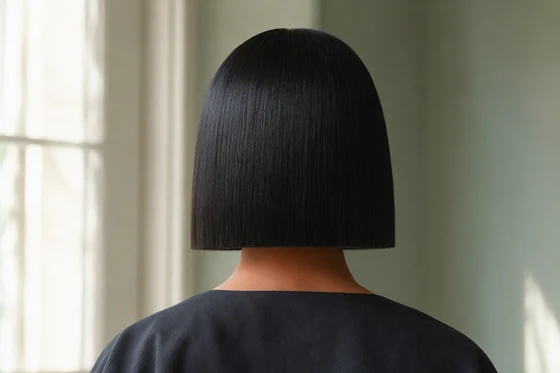
That severity is both the sell and the bill. On medium to thick, straight to slightly wavy hair, the box bob delivers the most polished line on this page with very little daily work: 5 to 15 minutes, mostly smoothing. On very thick hair it can swell into a wedge unless the stylist debulks the interior invisibly, and on curly hair the solid line the cut depends on does not survive shrinkage, so most stylists steer curl toward the shaggy or layered versions instead. The maintenance is the strictest in the family: a single hard line at the jaw is a chin-length line six weeks later, so plan on trims every 4 to 6 weeks, and treat that as part of the price of the cut rather than a surprise.
On face shape, the box bob is the clearest example of the family’s placement logic. Its hard horizontal edge lands at the jaw, so by convention it doubles the strong corner of a square jaw and contrasts cleanly against a soft or round one. Some wearers want exactly that doubling: a squared cut on a squared jaw is a deliberate, coherent statement. If you would rather soften the corner than repeat it, the mechanics are laid out in our square-face guide.
How do the blunt bob, layered bob, and lob differ?
These three are the workhorses: less named-trend glamour, more of the actual bobs walking around.
The blunt (classic) bob is the reference cut the others are defined against: chin length, single length, solid perimeter, fringe optional. It is the version to picture when a study, a stylist, or this article says “bob” without a modifier. Its virtues are the hard line’s virtues, maximum perceived density and a clean graphic edge, and its costs are the hard line’s costs, visible growth and a 5-to-7-week trim cycle. On fine hair it is the standing recommendation of the whole family, for reasons the next section makes concrete.
The layered bob keeps the bob’s perimeter but cuts internal layers above it, typically starting at the jaw. The trade is exactly the one from the mechanics section: some end-density spent, movement and bounce bought. On medium to thick hair, especially with wave, the layers are what stop the cut from reading as a solid block, and current trend coverage treats the layered bob as a fixture rather than a moment [1]. Ask for the perimeter to stay visibly solid and the layers to live inside the shape; a layered bob whose ends go wispy has spent more density than it needed to.
The lob is the long bob, chin to collarbone, and it is the family’s lowest-commitment member. The weight line sits low, which by convention suits nearly every face shape because it clears the cheek and jaw zones entirely; it still ties back, which no other bob here reliably does; and it forgives 8 to 10 weeks between trims because an inch of growth on a collarbone cut changes the silhouette less than on a jaw cut. If you are reading this article undecided, the lob is the reversible experiment: live at collarbone length for a season, then commit shorter with data. Readers over 50 weighing this length band against shorter options will find the full decision framework in our short hairstyles for women over 50 guide.
What about the A-line and the shaggy bob?
The A-line, or graduated, bob changes the angle of the line instead of its height. The back is cut short, often stacked in graduated layers at the nape, and the length increases toward the face, ending at or near the chin in front, commonly 1.5 to 2 inches longer than the back. The result is a diagonal weight line, and diagonals are the tool face-shape convention reaches for when it wants to interrupt width: on round and square faces the angled line gives the eye a path instead of a horizontal bar. The stacked back builds volume at the crown for free, which fine, flat hair banks. The cost is that the shape is directional and precise: it needs a 5-to-7-week trim cycle to keep the angle true, and it is the hardest bob on this page to grow out gracefully, because the back has to catch up to the front.
The shaggy bob breaks the weight line on purpose. Choppy layers run through the whole cut, usually from cheekbone level down, typically with a curtain fringe, and the finish is razored or point-cut so no single edge dominates. It is the bob for wavy and curly hair, because broken layers let texture spring into shape instead of fighting a solid perimeter, and it is the lowest-styling entry in the family: 5 to 10 minutes, mostly product and scrunching, with air-drying not just tolerated but preferred. It also grows out better than anything else here, blurring rather than collapsing, which stretches trims to 8 to 10 weeks. The trade: it spends the most end-density of any bob, so fine hair should approach it carefully, and its volume sits at eye-to-cheek level, which is a gift on long oblong faces and a width-adder on round ones. If the shag’s layered, face-framing logic appeals but you want to keep your length, its long-hair sibling is covered in our butterfly haircut guide.
Which bob should fine hair pick?
The blunt-perimeter ones, and this is the best-evidenced claim on the page. Perceived hair thickness is driven by measurable fiber properties: research quantifying how much hair women appear to have found that perception tracks both the number of fibers and the diameter of each one, and that both measures decline with age, with diameter peaking in the mid-40s and density declining from the 30s onward [6]. That finding is research-backed, and it has a direct cutting consequence: fine hair has the least mass at the ends, so a cut that stacks every strand at one length, a blunt bob, a box bob, a minimally textured French bob, concentrates what exists into the thickest possible line. Layering does the reverse: every layer removes fibers from the perimeter, which is why a heavily layered or shaggy bob on fine hair often reads thinner than the same hair worn long.
Length multiplies the effect. Shorter hair carries its own weight better, lifts at the root more easily, and shows less of the taper that fine lengths develop. Chin length or above is the sweet spot; by the collarbone the advantage is mostly gone. If low density rather than fine diameter is your actual situation, the two problems overlap but are not identical, and our hairstyles for thin hair guide separates them and covers the full toolkit beyond the cut.
For thick and wavy hair, invert the logic. The blunt cuts hold their line but can swell; the Italian, layered, and shaggy bobs are built to spend surplus weight on movement. The practical middle path for thick hair that wants a blunt look is internal, invisible layering: the perimeter stays solid, the interior loses bulk, and the cut behaves.
How do you ask for each bob at the salon?
Names travel badly between salons; numbers do not. Screenshot the script for your cut and read it as written.
- French bob: “Chin length at the longest, and a soft, slightly choppy fringe that hits just at my brows. Point-cut the perimeter so the ends look lived-in, not solid. Minimal layering, and cut it to air-dry.”
- Italian bob: “One inch below my jaw, blunt perimeter, no visible layers. Debulk internally if my hair is heavy, and shape it for root volume with a bend at the ends. No fringe.”
- Box bob: “Jaw length, one length, no layers, no elevation, cut point-blunt so the perimeter is a solid squared line. Keep the corners; do not round them off.”
- Blunt bob: “Chin length, single length all the way around, blunt-cut ends, corners softened just slightly. No texturizing through the perimeter.”
- Layered bob: “Between chin and collarbone, keep the perimeter solid, and put internal layers in starting at jaw level for movement. Nothing wispy at the ends.”
- Lob: “Collarbone length, soft long layers through the back, front pieces angled about half an inch longer than the back.”
- A-line bob: “Chin length in front, about one and a half to two inches shorter in back, with the back graduated and stacked at the nape. Show me the angle in the mirror before you cut it.”
- Shaggy bob: “Chin to shoulder length, choppy layers throughout starting around my cheekbones, a curtain fringe I can split at the middle, and razored or point-cut ends. Cut it for my natural texture and check it dry.”
Two additions that improve any of these appointments. First, state your trim honesty out loud: “I will realistically come in every N weeks,” and let the stylist adjust the cut’s precision to that number; a box bob maintained on a 10-week cycle is a worse haircut than a layered bob maintained on the same cycle. Second, if you want to preview shapes before committing, a virtual try-on app is a cheap first filter before the scissors make it real.
What does a bob honestly cost to keep?
The bob’s reputation as low-maintenance is half true, and the halves are worth separating.
Daily cost: genuinely low to moderate. Most bobs style in 5 to 15 minutes; the Italian is the outlier at 10 to 20 because its silhouette is built at the mirror. The shaggy bob and the fringeless French bob are the true air-dry cuts. Anything with a fringe adds a 2-to-3-minute daily commitment, because fringes show sleep and oil first, plus a between-trims fringe maintenance question worth raising at the first cut; many salons offer free or cheap fringe trims between appointments.
Calendar cost: higher than most articles admit. The family’s design lives in a line, hair grows about half an inch a month, and the line moves with it. Trims every 6 to 8 weeks are the honest baseline for the family; the geometric extreme, box and blunt bobs, wants 4 to 6, and the forgiving end, lob and shaggy bob, stretches to 8 or 10. In US dollars: $60 to $150 per cut at a mid-range salon, higher in major metros, across 6 to 9 visits a year lands between roughly $400 and $1,200 annually before tips and product. A precision bob is cheap in minutes and expensive in appointments; a long layered cut is the reverse. Neither is wrong, but only one matches your calendar, and by convention stylists will quietly steer chronic appointment-skippers toward the layered end of the table for exactly this reason.
One more honest line: a bob is a commitment at the exit, too. Growing one out passes back through every awkward length it skipped, and the A-line and box versions grow out worst. The lob and shaggy bob are the versions to pick if you suspect this is a one-season experiment. If face shape is the variable you are still weighing, the conventions in the table are unpacked mechanically across our face-shape guides, and readers of our oval-face guide should know the convention that “everything works” on ovals mostly means the placement rules bite less, not that placement stops mattering.
The bottom line
Every named bob is one weight line moved up or down and softened or kept hard: French is short, fringed, and undone; Italian is jaw-length and full; box is one length and severe; blunt is the classic reference; layered, A-line, and shaggy spend density on movement, angle, and texture; the lob is the low-commitment entry. Pick by hair type first, blunt lines for fine hair, layered ones for thick and wavy, then by placement against your face-shape preferences, then by the trim cadence you will actually keep. Bring the script, say the numbers, and state your real appointment frequency out loud. The right bob is the one whose upkeep you can tell the truth about.
Frequently asked questions
What is the difference between a French bob and an Italian bob?
Length, fringe, and finish. A French bob sits between the cheekbone and the chin, almost always carries a fringe, and is finished with texturized, deliberately imperfect ends. An Italian bob sits at the jaw or just below it, usually skips the fringe, keeps the perimeter blunt, and is styled with root volume and bend for a fuller, more polished silhouette. If you want short and undone, ask French; if you want fuller and polished, ask Italian.
What exactly is a box bob?
A box bob is a jaw-length cut with no layers and no elevation: every strand is cut to the same solid perimeter, which creates a squared, architectural line. It is the most precise member of the bob family and the least forgiving, because the single line shows every millimeter of growth. It suits straight to slightly wavy hair of medium to thick density and needs trims roughly every 4 to 6 weeks to stay sharp.
Which bob is best for fine hair?
Blunt-perimeter bobs: the classic blunt bob, the box bob, or a French bob with minimal texturizing. Fine hair loses visible density at the ends first, and a blunt line stacks every strand at one length so the perimeter reads as thick as your hair can look. Heavy layering does the opposite by thinning the ends further. Chin length or shorter concentrates the effect.
Which bob is best for thick or wavy hair?
The Italian bob, the layered bob, or the shaggy bob, because all three build in internal layers that remove bulk and let wave form instead of triangling outward. A fully blunt cut on very thick hair can swell into a wedge shape as it dries. If you want a blunt look on thick hair, ask for invisible internal layers that keep the perimeter solid while debulking the interior.
How often does a bob need a trim?
Every 6 to 8 weeks for most versions, and every 4 to 6 for the sharpest ones, the box bob and blunt bob, because a single hard line shows growth fastest. Hair grows roughly half an inch a month, and a bob's entire design lives in where its line lands, so an 8-week-old jaw-length bob is a chin-length bob whether you chose that or not. Budget for it before you commit: it is the honest cost of the cut family.
Do bobs work on round faces?
Yes, with placement chosen deliberately. Stylist convention warns against a heavy line at cheek level on a round face, which rules out the shortest French bob but not the family: a chin-length blunt bob, an Italian bob at or below the jaw, or an A-line bob with a longer front all keep the weight below the widest part of the face. The convention is about where the line lands, not about bobs as a category.
What is a lob and does it count as a bob?
A lob is a long bob, landing anywhere between the chin and the collarbone, and it counts: the weight still sits in one perimeter line, just a lower one. It is the lowest-commitment entry to the family because it preserves enough length to tie back, wave, or tuck, and it tolerates 8 to 10 weeks between trims better than any shorter version. Most people who are unsure between a bob and medium length should start here.
How much does a bob haircut cost to maintain per year?
In the US, expect $60 to $150 per cut at a mid-range salon, more in major cities, and 6 to 9 visits a year depending on how sharp you keep the line. That is roughly $400 to $1,200 annually before tips and products. Sharp geometric versions sit at the top of that range because they need more frequent, more precise trims; layered and shaggy versions sit lower because they blur as they grow instead of collapsing.
- Kilikita J. 12 Fresh Bob Haircut Trends We're Seeing Everywhere This Summer. Refinery29. 2026.
- Stuart E. The 6 Best Bob Haircut Trends for 2026. Marie Claire. 2025.
- Buneo I. What Is a Box Bob? Experts Weigh In. NewBeauty. 2025.
- Mappoura L. The Italian Bob Is the Trending Haircut That Gives Tons of Volume. Cosmopolitan (syndicated). 2025.
- John Frieda editorial team. Guide to French Bobs. JohnFrieda.com. 2025.
- Robbins C, Mirmirani P, Messenger AG, et al. What women want: quantifying the perception of hair amount, an analysis of hair diameter and density changes with age in Caucasian women. British Journal of Dermatology. 2012;167(2):324-332.