Cuts by face shape
The Butterfly Haircut: Who It Suits, How to Ask for It, How to Style It
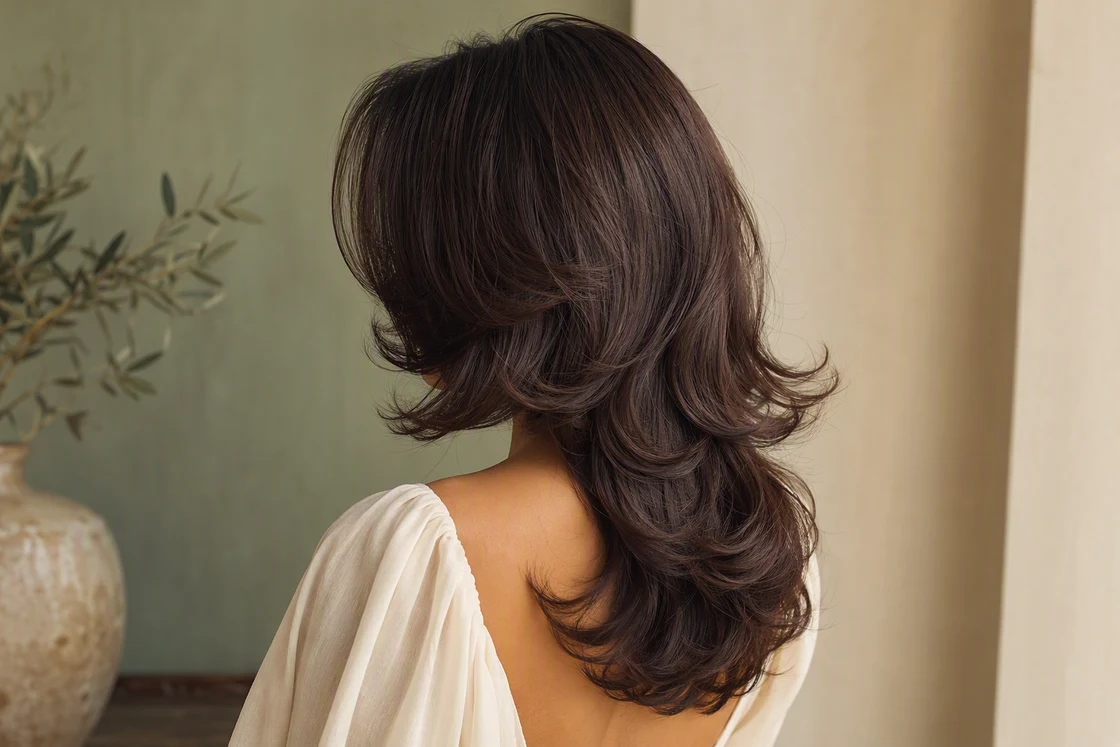
The butterfly haircut is a two-tier layered cut: short face-framing layers that land roughly two to three inches below the chin, worn over long layers that fall at or below the shoulders. The tiers are kept deliberately distinct rather than blended, which is why clipping the long layer up produces a convincing faux bob. It works best on medium to thick hair and depends on a round-brush blowout to hold its shape.
Most viral haircuts burn out in eighteen months. The butterfly haircut peaked in 2023, was declared over at least twice, and is still one of the highest-volume haircut searches in the US three years later, with interest growing rather than fading. That endurance is worth taking seriously, because it usually means a trend name is sitting on top of a genuinely useful structure. This guide defines that structure precisely, maps it against face shapes and hair types with the conventions labeled as conventions, and prices it honestly in salon dollars and morning minutes.
What exactly is a butterfly haircut?
Strip away the name and it is a two-tier layering system on long hair.
Tier one, the wings: short face-framing layers cut around the front and sides, with the shortest pieces landing roughly two to three inches below the chin. They are cut with curved, feathered ends and are designed to flick away from the face when styled, which is where the butterfly image comes from: two soft panels opening outward on either side of the face [1][2].
Tier two, the length: long layers through the back and underneath, typically falling just below the shoulders, and often longer. This tier keeps the cut recognizably long hair.
The defining decision is what happens between the tiers. A conventional long-layer cut blends short into long so gradually that no single layer reads as a separate event. The butterfly does the opposite: it maintains deliberate contrast between the chin-length tier and the long tier, so you can see two distinct levels in the finished cut [1]. That gap is not a blending failure. It is the entire point, and it is what separates a butterfly cut from the long layers you may already have.
The name is recent even though the structure is not. Celebrity stylist Sunnie Brook coined “butterfly haircut” around 2022, and the cut borrows openly from 1970s feathered styles and the layered 1990s cuts that “The Rachel” made famous [1][2][4]. It broke out on TikTok and became the most-searched hair trend of 2023 [4]. Search volume has held at six figures monthly in the US since, which puts it in rare company: most named trend cuts are in steep decline two years after their peak, and this one is still climbing. If you are still deciding whether any named trend cut is right for you, our what haircut should I get guide covers the decision framework that comes before any specific cut.
Why does this cut photograph so well?
Two mechanical reasons, and they explain most of the cut’s social media career.
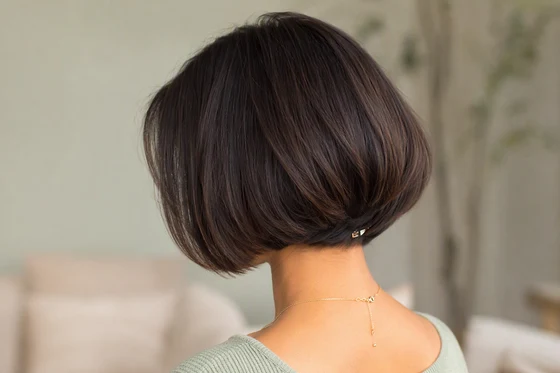
Reason one: the faux bob. Because the wing tier is a complete, self-contained shape ending below the chin, clipping or pinning the long tier up underneath leaves a convincing chin-length bob showing. Brook describes the cut as “two haircuts in one,” an optical illusion that lets you wear short hair without cutting your hair short [1]. This is the trick that fueled the trend: the before-and-after transformation video, long to bob and back, costs nothing and takes thirty seconds. It is also genuinely useful off camera. One cut covers the days you want length and the days you want everything off your neck, and it lets you audition a bob for months before committing scissors to it.
Reason two: volume physics. Layers remove weight from the mid-lengths of the hair. Less hanging weight means the roots and upper lengths lift instead of being dragged flat, and the staggered ends of the two tiers curve away from the head instead of hanging in one dense curtain. The result is a silhouette that is widest and bounciest around the face and shoulders, which reads as fullness on camera even on hair that is not especially thick [2][3]. The 1970s blowout aesthetic the cut references was built on exactly this: layer, then round-brush the layers into curves.
Notice that both reasons are styled effects. The faux bob requires clips and two minutes; the volume requires a blowout. Unstyled, the butterfly is a quiet cut, and we will price the styling honestly below.
Which face shapes does the butterfly haircut suit?
First, the honest frame: face-shape matching is stylist convention, inherited from cosmetology training, not validated science. No study shows that matching cut to face shape changes how faces are rated. What the conventions actually encode is where a cut places lines and volume, and that part is real and predictable. The butterfly places a flick of volume at chin level, diagonals past the cheekbones, and length below the shoulders, so the conventional matrix follows from those placements.
| Face shape | Conventional verdict | The mechanics behind it |
|---|---|---|
| Round | Works well with the standard spec | Wings landing below the chin draw diagonals past the widest point of the face without adding width at cheek level. Keep the shortest wing at or below chin length. |
| Square | Works well, soften the spec | Curved, feathered wing ends passing the jaw put soft diagonal lines over the jaw corner. Avoid wings that end exactly at the jawline, which underline the corner instead. |
| Oval | Everything works, pick by hair type | With length and width already balanced, wing placement is a free choice. Decide based on density and styling budget rather than geometry. |
| Oblong or long | Use with adjustment | Crown volume and visible vertical length both extend an already long face. Ask for wings that start higher, near cheekbone level, so the cut adds width rather than more length. |
| Heart | Works with lower wings | A narrow chin pairs well with wings that add their flick at or below chin level, filling out the lower third. Wings ending at cheekbone height repeat the widest line of the face. |
The three shapes where the butterfly earns its default reputation are covered in depth in our dedicated guides: hairstyles for round faces explains the diagonal-lines logic the wings exploit, hairstyles for square faces covers why layer ends should pass the jaw rather than stop on it, and hairstyles for oval faces explains why “everything suits you” is true but useless, and what to optimize instead. Each of those guides also tells you when to break its own rules. The matrix above is a map of what the cut does, not a permission system.
What does the butterfly haircut demand from your hair?
This is where most butterfly haircut coverage goes soft, so let us be direct: the cut has a density requirement.
Scalp hair density varies enormously between individuals: measured studies put typical total density in the low hundreds of hairs per square centimeter, with young adult averages around 250 to 300 in some populations and well under 200 in others, before any thinning is factored in [5][6]. That spread is research-backed, and it matters here because the butterfly cut spends density. Every layer transfers hair from the ends to the interior of the shape. Hair that starts thick can afford the spend: the long tier stays visually solid and the wings look like full panels. Hair that starts fine or low-density cannot. The wings come out stringy, with the individual strand count visible at the ends, and the long tier can look transparent below the shoulder because half its bulk has been layered away.
Industry sources are split on this, which is worth flagging as mixed evidence: trade coverage aimed at stylists names medium to thick hair as the cut’s natural territory [2], while consumer-facing brand content often calls the cut a volume solution for fine hair [3]. Both are describing something real. Layering fine hair does lift it at the root; it also thins the ends. Whether the trade is worth it depends on how fine you start, and the further below medium density you are, the worse the exchange rate gets.
The moderated version for fine hair. If your hair is fine but you want the shape, ask for the butterfly logic at reduced intensity: face-framing layers starting at the jaw rather than the cheekbone, only two or three cutting lines in the wings instead of a fully feathered panel, interior layering kept minimal so the long tier holds its weight, and overall length brought up to the collarbone so the remaining density has less territory to cover. You keep the flick, the clip-up trick, and most of the photograph, and you skip the transparent ends. Our companion guide to hairstyles for thin hair covers the full decision logic for low-density hair, including when to abandon layers entirely.
Texture notes. Straight hair shows the two tiers most clearly and depends most heavily on the blowout. Wavy hair is the sweet spot: enough natural bend to fill the layers, enough smoothness to show the structure. Curly hair wears the cut well as stacked volume rather than smooth flicks, with one non-negotiable adjustment: shrinkage can lift a wet-cut chin-length wing to cheek height once dry, so the cut should be made or verified on dry hair, with every target length specified as a dry length.
What does it actually cost to live with?
Three currencies: salon dollars, calendar weeks, and morning minutes.
Dollars. This is a precision layering cut, and it is priced as one. Expect $60 to $120 at a mid-range US salon and $150 to $250 or more with senior stylists in major metros. It is not a cut to bargain-hunt, because the entire result lives in where the tiers are placed and how the wing ends are finished. A blunt trim mis-executed grows out invisibly; a butterfly mis-executed is a visible step in the wrong place for two months.
Weeks. Plan on a trim every 6 to 8 weeks to keep the tier contrast crisp [3]. This cut has a built-in expiry behavior: as it grows, the short tier descends toward the long tier and the butterfly relaxes into ordinary long layers. That makes maintenance a genuine choice rather than an obligation. Re-trim on schedule and keep the signature, or let it slide to 10 to 12 weeks and accept a softer, more blended shape. The grow-out is one of the friendliest of any trend cut, which is part of why it has lasted.
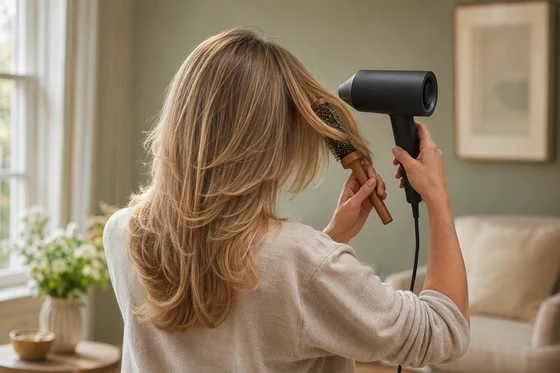
Minutes. Here is the honest number the inspiration photos do not carry. The butterfly haircut is a blow-dry-dependent cut on straight and loosely wavy hair. The reference styling is a round brush and dryer, working the wings forward and then flicking them out, plus lift at the crown [1]. Realistic budgets:
- Full round-brush blowout: 15 to 25 minutes on medium-length, medium-density hair, longer if thick or very long. This is the finish the cut is designed around, and it requires either round-brush coordination or a heated blow-dry brush, which flattens the learning curve considerably.
- Blow-dry brush shortcut: 8 to 12 minutes for wings, crown and top layer only, letting the underneath air-dry. The most sustainable weekday version.
- Velcro rollers: 5 minutes to set the wings and crown on dry or nearly dry hair, 20 to 30 minutes of wear while you do something else, 1 minute to remove.
- Air-dry, no intervention: 0 minutes, and an honest description of the result: on straight hair the tiers collapse into flat panels with visible steps, and the cut reads as thinner rather than bouncier. Wavy and curly textures fare much better, since the natural bend does the filling.
If your realistic morning budget is under five minutes and your hair is straight, this cut will spend most of its life in its unstyled state. That is not a moral failing, but it is a reason to consider whether a lower-dependency cut serves you better; the styling-budget question belongs in your decision as much as the shape does.
How is it different from a wolf cut, a shag, or regular long layers?
These four get tangled together constantly, and the confusion has a cost: ask for one while showing a photo of another and the misunderstanding gets cut into your hair. The differences are structural.
| Butterfly cut | Wolf cut | Shag | Long layers | |
|---|---|---|---|---|
| Layer structure | Two distinct tiers: chin-level wings over shoulder-plus length | Continuous heavy layering from a short, full crown downward | Layers stacked evenly from crown to ends, uniform dishevelment | One gradual blend, short to long, no visible steps |
| Contrast between layers | High and deliberate | High and choppy | Medium, evenly distributed | Deliberately invisible |
| Finish of the ends | Curved, feathered, polished | Razored, piecey, raw | Textured, lived-in | Smooth, blended |
| Reference styling | Round-brush blowout, smooth volume | Texture spray, air-dry, mess on purpose | Light product, scrunch or diffuse | Anything; flexible |
| Daily styling dependency | High on straight hair | Low | Low to medium | Low |
| Overall vibe | 70s blowout, soft glamour | Rock edge, deliberate rebellion | Retro casual | Neutral default |
| Grow-out behavior | Relaxes into long layers | Awkward mid-phase at the crown | Gradual, forgiving | Seamless |
The one-sentence versions: the butterfly is polished volume with a visible two-tier structure; the wolf is a shag pushed shorter and choppier at the crown with an unpolished finish; the shag distributes its texture evenly instead of splitting into tiers; long layers are the invisible-blend baseline the other three deliberately depart from. Trade press draws the butterfly-wolf line exactly there: heavy soft face-framing built for a bouncy blowout on one side, choppy low-maintenance edge on the other [2]. Notice the styling row while you choose. The wolf and shag are cheaper to run day to day; the butterfly pays out only when it is styled.
How do you ask your stylist for a butterfly haircut?
Bring numbers, not just the name. Trend names drift between salons, and the same words can mean different cuts in different chairs. This is the script, and the figures in it are the cut’s published spec [1][2][3]:
The standard version:
“I’d like a butterfly cut with two distinct tiers. Shortest face-framing layers landing about two to three inches below my chin, cut to flick away from my face. Long layers through the back staying at or below my shoulders. Please keep the two tiers separate rather than blending them all the way together, and cut it to be styled with a round brush.”
The fine-hair moderated version:
“I want the butterfly shape moderated for fine hair. Face-framing layers starting at my jaw, nothing shorter than that. Two or three face-framing lengths, not a fully feathered panel. Keep interior layering minimal so my length stays as full as possible, and take the overall length to my collarbone so the ends don’t go sparse.”
The curly version, add one sentence:
“Please cut it dry, or check every length dry, and treat all the lengths we discussed as dry lengths after shrinkage.”
The adjustment sentences, if you need them: for a long face, “Start my shortest wing at cheekbone level so the cut adds width rather than length.” For a square jaw you want softened, “Make sure no layer ends exactly at my jawline; everything either above or clearly past it.” For a first-time trial, “Cut the wings on the longer end of the range; we can take them up at the next visit.” Wings can always go shorter later. They cannot go longer for two months.
Two consultation questions worth asking before anyone picks up scissors: “Do you think my density can carry full butterfly layering, or should we moderate it?” invites the honest density conversation this guide has been having, and a good stylist will give you a straight answer with your hair in their hands. And “What will this look like air-dried?” forces the styled-versus-unstyled gap into the open before you commit to it.
The bottom line
The butterfly haircut is a two-tier layering structure with a precise spec: wings ending two to three inches below the chin, long layers at the shoulders or below, and deliberate contrast between the tiers. It suits most face shapes once the wing placement is adjusted, but its real gatekeepers are density and styling budget: it wants medium or thicker hair and a round-brush blowout, and on fine hair or a zero-minute morning it under-delivers unless you order the moderated version. Priced honestly, that is $60 to $250 per cut, a trim every 6 to 8 weeks, and 10 to 25 minutes on styled days. If those numbers fit, it is one of the most durable and versatile long-hair structures of the decade, and the clip-up faux bob is a genuinely practical bonus rather than just a camera trick.
Frequently asked questions
What is a butterfly haircut in simple terms?
It is long hair cut into two distinct layers rather than one blended cascade. The top tier is a set of short face-framing layers, often called wings, that end two to three inches below the chin. The bottom tier stays long, at or below the shoulders. The visible gap between the two tiers is the signature: most layered cuts blend it away, the butterfly keeps it.
Who invented the butterfly haircut?
Celebrity hairstylist Sunnie Brook coined the name around 2022, describing it as two haircuts in one because the short tier can stand alone as a faux bob when the long tier is pinned up. The structure itself is older: it borrows directly from 1970s feathered styles and 1990s layered cuts like the Rachel. The name and the clip-up trick are what made it a social media phenomenon in 2023.
Does the butterfly haircut work on thin or fine hair?
In its full form, usually not well. The cut removes weight from the mid-lengths, and hair that starts with low density can end up with transparent, stringy wings and sparse-looking ends. A moderated version works better: fewer and longer face-framing layers starting at the jaw rather than the cheekbone, minimal interior layering, and length kept at collarbone rather than mid-back so the long tier still looks populated.
What is the difference between a butterfly cut and a wolf cut?
Both are heavily layered, but they point in opposite directions. The butterfly is soft and polished: two clean tiers, curved ends, built for a bouncy blowout. The wolf cut is choppy and deliberately undone: shag-style layers stacked from a short crown downward, styled with texture products rather than a round brush. If you want smooth volume, ask for the butterfly; if you want piecey edge, ask for the wolf.
How do you style a butterfly haircut without heat?
With difficulty, and it is worth being honest about that before you commit. The cut is designed around a blowout: air-dried, the two tiers tend to collapse into flat panels with visible steps. The best low-heat options are velcro rollers in the wings and crown for 20 to 30 minutes while you do something else, overnight braids or rollers for wavy bend, or embracing natural texture if your hair has enough wave or curl to fill the layers on its own.
How often does a butterfly haircut need trimming?
Every 6 to 8 weeks to keep the two tiers reading as two tiers. As the cut grows, the short layer drops toward the long one and the signature contrast blurs into ordinary long layers. If you are growing it out, you can stretch to 10 to 12 weeks, and the grow-out is graceful precisely because it fades into a conventional layered cut rather than an awkward shape.
Does the butterfly haircut work on curly hair?
Yes, with two adjustments. Shrinkage means a wing cut to chin length while wet can spring up to cheek level when dry, so the cut should be done or at least checked on dry hair, with the target lengths defined as dry lengths. Curl also fills the layers naturally, which removes much of the blowout dependency: diffusing counts as styling, and the tiered structure shows up as stacked volume rather than smooth flicks.
Is the butterfly haircut still in style in 2026?
Yes. It was the most-searched hair trend of 2023 and, unusually for a viral cut, search interest has held and kept growing since. The durability makes sense: underneath the trend name it is a classic layered long cut with a practical party trick, so it does not date the way sharper trend cuts do.
How do I ask my stylist for a butterfly haircut?
Name the cut, then give numbers: 'A butterfly cut with two distinct tiers. Shortest face-framing layer landing about two to three inches below my chin, long layers staying at collarbone or below. Please keep the tiers separate rather than fully blended, and cut it to be worn with a round-brush blowout.' If your hair is fine, add: 'Moderate it for my density: wings starting at jaw length, nothing shorter, and keep the interior layering minimal.'
- PureWow (Sunnie Brook, Danielle Priano, Rodney Cutler interviews). I'm Making Space for the Butterfly Haircut in 2025: Why It's Still the Hottest Hair Trend. PureWow. 2025.
- Hairdressers Journal International. What Is the Butterfly Haircut? Layers, Styling Tips and Celeb Inspiration. HJI. 2025.
- John Frieda. Guide to Butterfly Cuts: Ideas and Inspo for Butterfly Haircuts. JohnFrieda.com.
- Butterfly haircut. Wikipedia. Accessed 2026.
- D'Amico D, Vaccaro M, Guarneri F, Borgia F, Cannavo S, Guarneri B. Phototrichogram using videomicroscopy: a useful technique in the evaluation of scalp hair. European Journal of Dermatology. 2001;11(1):17-20.
- Alsharif SH, AlGhamdi KM. Evaluation of Scalp Hair Density and Diameter in the Arab Population: Clinical Office-Based Phototrichogram Analysis. Clinical, Cosmetic and Investigational Dermatology. 2022.