Hair color, decoded
Low-Maintenance Hair Color: Lived-In Ideas Ranked by Weeks Between Salon Visits
The lowest-maintenance salon color is dimensional, lived-in color finished with a root smudge or shadow root: it stretches appointments to 12-16 weeks because regrowth blends into the color instead of striping against it. A gloss-only routine needs the chair every 6-8 weeks, lowlights woven into gray every 8-10, and fully natural hair with an optional gloss needs zero mandatory color visits. The general law: the less contrast your color creates at the scalp line, the longer it lasts.
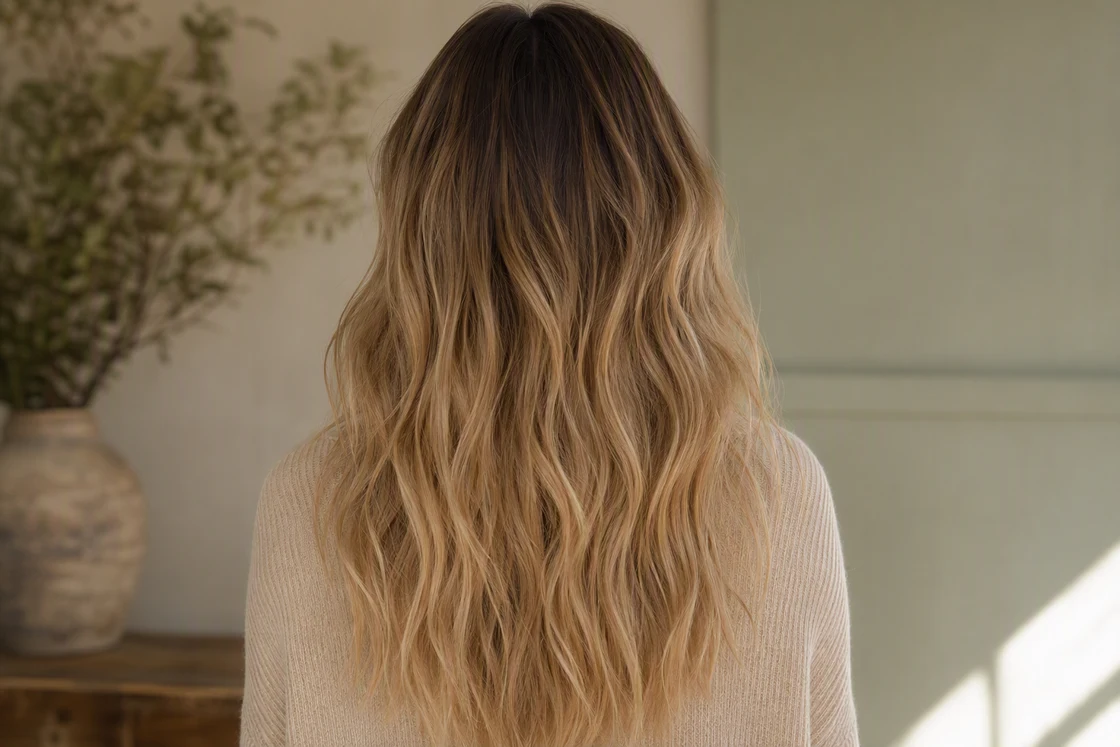
Most hair color rankings sort ideas by how they look on day one, which is the one day that matters least. You wear a color for the twelve or sixteen weeks after the appointment, not the afternoon of it. So this page ranks every credible low-maintenance color idea by a single, unglamorous metric no lookbook uses: realistic weeks between salon visits, with the cost per year that cadence actually produces. The physics of regrowth does not negotiate, but it can be designed around, and that design has a name now: lived-in color.
Why rank color by weeks between salon visits?
Because the interval is the product. Two colors can photograph identically in the salon chair and cost the same per visit, yet one demands the chair every five weeks and the other every four months. Over a year, that is the difference between 10 appointments and 3, between $1,200 and $600, and between a color that owns your calendar and one you barely think about.
The interval also decides how the color looks on an average day. A high-maintenance color spends most of its life partially grown out, because most days are not appointment week. A color built to grow out well spends most of its life looking the way it was designed to look. Ranked by weeks between visits, “low maintenance” stops being a vibe and becomes a number you can compare, budget, and hold your colorist to.
One scope note: this ranking covers salon color. Box dye at home changes the money math but not the physics, and it removes the one person whose job is to keep you out of a correction appointment, which at $300 to $800 is the most expensive service in the building [5].
What actually decides how fast color grows out?
Three mechanical facts, and every technique on this page is a response to them.
Hair growth is a fixed clock. Scalp hair grows at an average of roughly 1 cm per month, about half an inch; a literature review across growth studies puts the mean near 1.06 cm per month, with individual variation around that figure [1]. This is research-backed and it is the whole ballgame: at 8 weeks you carry about 2 cm of new growth, at 16 weeks about 4 cm. No product slows it. Every color decision is really a decision about what those centimeters will look like against what is below them.
Contrast at the scalp line is what reads as “roots.” Regrowth itself is invisible; the demarcation line is what you see, and its visibility scales with the color distance between your natural root and the color sitting next to it. An all-over blonde on a naturally brown head creates maximum contrast at the scalp, so 1.5 cm of growth is glaring. A color within a shade of your natural root creates almost none, so the same 1.5 cm disappears. Low-maintenance color is, mechanically, contrast management at the first two inches.
Lightening is the expensive direction. Depositing color is chemically gentle and fades softly. Lifting color requires oxidative bleaching, which degrades the cuticle, oxidizes cortex proteins, and leaches them from the fiber, with damage compounding as bleaching severity increases [3]. This is research-backed, and it explains a pattern you will see in the ranking: every long-interval strategy minimizes how much lightened hair sits near the scalp, and every short-interval strategy puts fresh lift right at the root, buying brightness with both damage and calendar time.
The ranking: every low-maintenance idea by weeks between visits
Prices are typical US salon ranges compiled from 2026 pricing surveys [5]; a big metro can run double a small-market salon for the same service, so treat the yearly figures as a realistic band, not a quote. Intervals are what colorists actually see clients sustain, which is a convention, not a lab number.
| Rank | Approach | Realistic gap between color visits | Visits per year | Typical US price per visit | Realistic cost per year |
|---|---|---|---|---|---|
| 1 | Natural pigment, optional gloss | No mandatory color visits | 0-4 (gloss, optional) | $45-90 | $0-360 |
| 2 | Balayage or teasylights + root smudge | 12-16 weeks | 3-4 | $100-500 | $300-2,000 |
| 3 | Lowlights woven into gray | 8-10 weeks | 5-6 | $60-150 | $300-900 |
| 4 | Gloss-only over your natural base | 6-8 weeks | 7-9 | $45-90 | $315-810 |
| 5 | Traditional foil highlights | 6-8 weeks | 7-9 | $120-300 | $840-2,700 |
| 6 | All-over permanent single process | 4-6 weeks | 9-13 | $50-120 (root retouch) | $450-1,560 |
#1. Your natural pigment, worn deliberately, with an optional gloss. Zero contrast at the scalp because there is no scalp line: the ultimate wash and wear hair color is the one growing out of your head. This is not a cop-out entry. The deliberate version involves a colorist once or twice for a gloss that adds shine and corrects tone, and a cut that treats the natural color, gray included, as the design. Cost per year: $0 to about $360 if you keep a quarterly gloss. If your natural color includes incoming gray and you want it to look chosen rather than pending, the strategy has its own playbook, covered in gray blending vs gray coverage.
#2. Balayage or teasylights finished with a root smudge or shadow root: 12-16 weeks. The flagship of lived-in color and the reason the category exists. Lightness is painted onto the mid-lengths and ends, kept away from the scalp, and the root zone is either left natural or deepened with a smudge so that regrowth emerges into hair that already matches it. At 16 weeks you are carrying roughly 4 cm of new growth [1], and it reads as depth, not neglect. Full balayage runs $200 to $500 or more per visit, partial versions $100 to $200 [5]; at 3 to 4 visits a year the annual total lands between roughly $600 and $2,000 for the full service, often less than a foil habit at a fraction of the visits. Many clients drop a standalone $45-90 gloss in the middle of the cycle to refresh tone, which adds a short visit but can push the color appointment past 16 weeks. How this compares to classic foils, mechanically and dollar for dollar, is the whole subject of balayage vs highlights.
#3. Lowlights woven into gray: 8-10 weeks. For hair that is substantially gray, this inverts the usual problem. Instead of covering gray and then fighting the silver regrowth line every four weeks, the colorist weaves strands of depth through the gray, so silver remains part of the design and the regrowth coming in matches much of what is already there. Contrast at the scalp collapses, and the cadence relaxes to 8 to 10 weeks, priced like partial foil work at roughly $60 to $150 per visit [5]. Worth knowing: gray arrives more gradually than folklore claims. The famous rule that half of people are half gray by 50 does not survive measurement; a worldwide survey found only 6 to 23 percent reach that threshold by then [2], which means most heads spend years in the mixed phase where lowlights do their best work.
#4. Gloss-only over your natural base: 6-8 weeks. A gloss (toner and gloss are functionally the same service) is demi-permanent color: it deposits tone and shine, lifts nothing, and fades over roughly 25 to 30 washes instead of growing out with a line. Because there is no demarcation, a lapsed gloss is a soft fade, not an emergency. The interval is short, but the visits are short too, often under an hour, and cheap at $45 to $90 [5]. Yearly cost at a faithful 6-to-8-week cadence: roughly $315 to $810. This is the right tier for anyone who likes their natural color but wants it richer, cooler, warmer, or shinier.
#5. Traditional foil highlights: 6-8 weeks, and here for comparison. Classic foils lift from close to the root, which buys real brightness and real precision and then bills you for both: the regrowth line is a lightened stripe against your natural depth, visible within weeks. At $120 to $300 per full-foil visit, 7 to 9 times a year, the annual spend runs roughly $840 to $2,700 [5]. Foils are not a mistake; they are the maximum-brightness choice. They are simply not a low-maintenance one, and pretending otherwise is how people end up resenting a color they chose for the wrong metric.
#6. All-over permanent single process: 4-6 weeks, the baseline everyone is escaping. One uniform permanent shade meaningfully different from your natural root, blonde on brown or full coverage over mostly-gray, produces the hardest possible demarcation line, refreshed only by re-coloring the root zone. Root retouches are cheap per visit at $50 to $120 [5], but 9 to 13 of them a year total $450 to $1,560 and, more expensively, tether you to a four-week clock. If this is your current color, note that almost every escape route runs through tier 2 or 3: a colorist breaks up the solid color with dimension, then lets the intervals stretch.
What do the enabling techniques actually mean?
The interval gains in tiers 2 and 3 come from a small set of blending techniques with overlapping names. Plain-language definitions, so the menu stops being a mystery. These distinctions are convention, standardized by practice rather than by any governing body, so expect minor variation between salons.
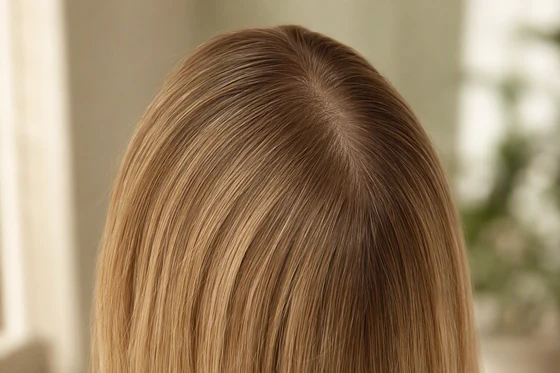
Root smudge. After lightening, the colorist applies a demi-permanent color at or within a shade or two of your natural root color and blends, or smudges, it an inch or so down into the lightness [6]. Purpose: erase the line between scalp and color so regrowth surfaces into a matching zone. The effect typically holds around two months before it needs refreshing, and because it matches your root, its own fade is invisible [6].
Shadow root. Same placement, more ambition: the root zone is deliberately deepened, often two or three shades below the lengths, as a visible design element. Think of the smudge as hiding a seam and the shadow as upholstering it in a darker fabric on purpose. A shadow root buys the longest grow-out of all, since your roots are now lighter than the color next to them, which reads as lift, not neglect.
Root melt. The long-blend version: root color is pulled further down, sometimes two or three inches, so there is no identifiable point where dark ends and light begins, a gradient rather than a smudge. Colorists often work it on wet hair for a softer diffusion. Best when the gap between your natural depth and your lightened ends is large.
Teasylights. Foil highlights with backcombing: each section is teased before lightener is applied, so product lands diffusely and the lift starts soft instead of in a hard line. The result is foil-grade brightness with balayage-grade grow-out. If you want lighter than hand-painting achieves but refuse the six-week foil treadmill, this is the compromise the industry built for you.
Gloss, toner, demi-permanent. All names for deposit-only color that adds tone and shine without lifting. It is the maintenance currency of every tier on this page: it refreshes lived-in color mid-cycle, keeps blended gray from yellowing, and serves as a standalone color plan in tier 4.
What do you give up at each tier?
Honest accounting, because every interval is bought with something.
Tier 1, natural: you give up choice of color, by definition, and if your gray is coming in you accept the mixed phase in public. A gloss manages tone but will not move you lighter.
Tier 2, balayage plus smudge: you give up peak brightness and precision. Lived-in color is engineered to be slightly darker at the root than a foil head, and hand-painted lift rarely reaches the icy, uniform blonde that close-root foiling achieves. You also give up day-one perfection: the look is designed for week eight, so it reads soft, not sharp, from the start. On very dark hair the trade steepens, because any lightness sits at high contrast and the colorist must keep it sparse to protect the grow-out.
Tier 3, lowlights on gray: you give up full gray coverage. Silver stays visible by design; this is blending, not erasing. If you want no visible gray at all, no long-interval option exists, and it is better to know that than to chase it: full coverage lives on the four-to-six-week clock of tier 6.
Tier 4, gloss-only: you give up lightening entirely and any dramatic change. A gloss can shift tone and depth, never lift. You also accept a shorter cycle than tier 2, just a cheap and fast one.
Tiers 5 and 6: you give up your calendar and, over years, some fiber quality: repeated close-root lightening is cumulative oxidative damage [3], and color-treated gray hair also tends to be drier and more porous fiber to begin with as sebum output declines with age [4]. That is research-backed, and it is why colorists push long-interval strategies hardest on the clients doing the most frequent lifting.
Is gray blending the ultimate low-maintenance path?
For anyone with meaningful incoming gray, yes, and it is worth spelling out why the logic converges there. Every technique above works by shrinking the contrast between what grows in and what was put on. Gray blending is the only strategy where the target keeps moving in your favor: as the percentage of silver rises, blended hair matches its own regrowth more and more closely, so appointments stretch further apart over time instead of closer together. Coverage runs the same movie in reverse, with the silver line returning faster against a solid dyed field every year.
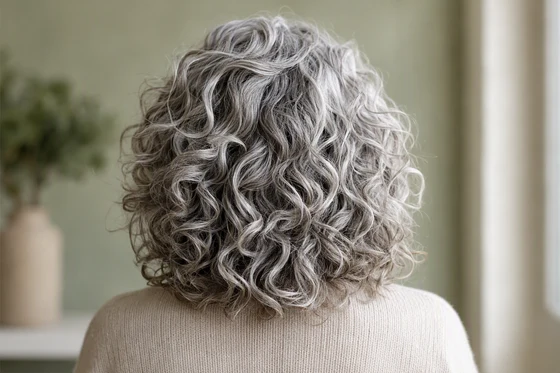
The endgame is tier 1: a fully transitioned head where the only chair time is a gloss to keep the silver bright and a great cut doing the structural work. Getting there without a harsh grow-out phase usually runs through tier 3 for a year or two, lowlights and glosses managing the transition while length replaces itself at that fixed centimeter per month [1]. The full route, including what to ask for at each stage, is covered in gray blending vs gray coverage, and the color strategy questions specific to mostly-gray and transitioning heads are in hair color for women over 50.
If you are not going gray, the ultimate low-maintenance path is tier 2 worn honestly: dimension placed low, roots owned, gloss in between, three appointments a year.
How do you ask your colorist for this?
Name the interval, not just the look. Screenshots of lived-in color are useful, but the sentence that changes the service is the one about the calendar. Scripts that work:
“I want this to grow out for 12 to 16 weeks and still look intentional. Build the color for week ten, not for today.”
“Keep all lightener at least an inch off my scalp, and smudge my root back to my natural level so there is no line.”
“I am going to stretch appointments. Would a shadow root or a root melt survive longer on my hair, and what will it look like in month three?”
“I have maybe 30 percent gray. I want it blended, not covered. What cadence does that put me on, and what does a year of it cost here?”
“What is my total for the year on this plan, visits times price? If it is over my budget, what is the next tier down?”
A colorist who engages with those questions is designing for the interval, which is the actual product. One who answers only in terms of day-one results is selling you tier 5 with tier 2 vocabulary, and the difference will bill you every six weeks.
The bottom line
Low maintenance is a number: weeks between visits, set by how much contrast your color creates at the scalp against hair that grows a fixed centimeter a month. Natural pigment with an optional gloss costs nothing in mandatory visits, balayage with a root smudge honestly delivers 12 to 16 weeks, lowlights on gray deliver 8 to 10, a gloss habit runs 6 to 8, and close-root foils or all-over color put you on a four-to-six-week clock no product will loosen. Every tier trades something, usually brightness or gray coverage, for its interval, and the trade is only bad when nobody told you about it. Pick the cadence you can keep, then choose the best color that cadence allows, not the other way around.
Frequently asked questions
What is the lowest maintenance hair color?
Your natural color, worn deliberately, with an optional gloss a few times a year for tone and shine: zero mandatory color appointments. Among actual color services, dimensional color like balayage finished with a root smudge or shadow root is the winner, realistically stretching 12 to 16 weeks between visits because the regrowth line is designed into the color rather than fought against.
What is the difference between a root smudge and a shadow root?
Both blur the line between your roots and your color, but they differ in depth and intent. A root smudge uses a shade at or very near your natural root color and blends it an inch or two down, so regrowth disappears into it. A shadow root goes deliberately darker, sometimes two or three shades, creating visible depth at the root as a style choice. The smudge is camouflage; the shadow is contrast placed on purpose.
How long does balayage actually last between appointments?
With a root smudge or shadow root built in, 12 to 16 weeks is realistic, and many clients stretch to 20 with a mid-cycle gloss. Hair grows roughly a centimeter a month, so at 16 weeks you carry about 4 cm of regrowth, but because balayage places lightness away from the scalp and the smudge matches your root color, that regrowth reads as intentional depth rather than a stripe.
How often do you need a gloss?
Every 6 to 8 weeks if the gloss is your whole color plan, because demi-permanent color fades over roughly 25 to 30 washes. Standalone glosses run about $45 to $90 in US salons and take under an hour. Stretch the interval by washing less often and using color-safe products; the gloss simply fades softly rather than growing out with a line.
Does low-maintenance color work on dark hair?
Yes, but the honest version is subtler. Dark bases show lightened pieces at higher contrast, so the same balayage that hides regrowth on a medium-brown base can stripe on near-black hair unless the colorist keeps the lightness fine, low-density, and well below the root zone. The reliable dark-hair plays are a rich gloss for tone and shine, or very soft, sparse balayage with a generous shadow root.
What are teasylights?
A foiling technique where each section is backcombed (teased) before lightener goes on, so the product lands diffusely instead of in a hard line at the root. The result is highlights with a built-in soft grow-out, closer to balayage's low-contrast regrowth but with more lift and brightness than hand-painting usually achieves. They cost like highlights but maintain like balayage.
Is balayage cheaper than highlights over a year?
Usually, despite the higher per-visit price. Full balayage commonly runs $200 to $500 per visit but needs only 3 to 4 visits a year at a 12-to-16-week cadence, roughly $600 to $2,000 annually. Traditional full foils at $120 to $300 every 6 to 8 weeks mean 7 to 9 visits, roughly $840 to $2,700. The interval, not the ticket price, decides the yearly total.
How do lowlights help when you are going gray?
Lowlights weave strands of your natural depth back through the gray instead of covering the gray, so the regrowth coming in is partly the same color as what was painted. That drops the root-line contrast dramatically, which is why the cadence relaxes to 8 to 10 weeks versus 4 to 6 for all-over coverage, and why a missed appointment is a soft blur rather than a hard stripe.
What does lived-in hair color mean?
It is the umbrella term for color engineered to look good while growing out: lightness kept off the scalp, roots left natural or deepened with a smudge or shadow, and tone maintained with gloss instead of frequent re-coloring. The look reads slightly softer and less polished than fresh foils on day one, and dramatically better than foils in month three. It trades peak brightness for a long, graceful decline.
- LeBeau MA, Montgomery MA, Brewer JD. The role of variations in growth rate and sample collection on interpreting results of segmental analyses of hair. Forensic Sci Int. 2011;210(1-3):110-116.
- Panhard S, Lozano I, Loussouarn G. Greying of the human hair: a worldwide survey, revisiting the '50' rule of thumb. Br J Dermatol. 2012;167(4):865-873.
- Grosvenor AJ, et al. The physical and chemical disruption of human hair after bleaching: studies by transmission electron microscopy and redox proteomics. Int J Cosmet Sci. 2018;40(6):536-548.
- Trüeb RM. Aging of hair. J Cosmet Dermatol. 2005;4(2):60-72.
- SalonsRated. Salon Prices 2026: Every Service in One Reference Table. 2026.
- L'Oréal Paris. What Is a Root Smudge and How Is It Done? Beauty Magazine.