Hair color, decoded
Balayage vs Highlights vs Babylights: Cost, Maintenance, and How to Choose
Highlights are woven sections lightened inside foil starting at the root, which gives maximum lift and a crisp result that needs touch-ups every 6 to 8 weeks. Balayage is lightener painted freehand onto the surface of the hair, concentrated through mid-lengths and ends, so it lifts less but grows out with a diffused line you can stretch 12 to 16 weeks. The bleach chemistry is identical in both; the real differences are lift, cost per year, and how the grow-out line behaves.
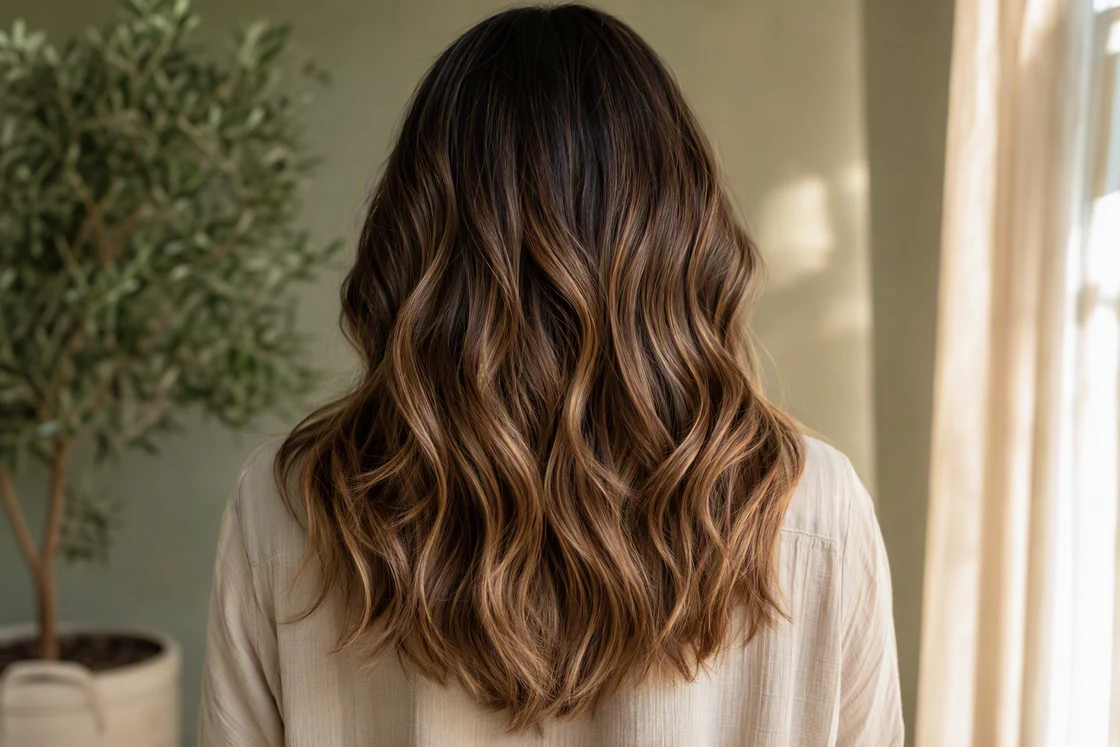
Balayage versus highlights is the most-asked question in hair color, and most of the answers online are written by salons selling one of the two. Here is the version with the incentives removed. These are not rival philosophies; they are two application methods for the same bleach, and they trade off against each other on exactly five axes: lift, sitting time, cost, grow-out behavior, and maintenance cadence. Once you see the trade-offs laid out, the choice mostly makes itself.
What is actually different between balayage and highlights?
One word: placement, and one physical variable: foil.
Traditional highlights are built by weaving out thin slices of hair, saturating each slice with lightener from close to the scalp down to the ends, and folding it into foil. The foil does two mechanical jobs. It isolates the section so lightener cannot smear onto neighboring hair, and it traps heat and moisture, which keeps the product active longer and drives more lift [6]. The result is a crisp, evenly lightened strand that starts at the root.
Balayage is French for sweeping. The colorist paints lightener freehand onto the surface of the hair, heavier at the ends, feathered up toward the mid-lengths, deliberately stopping short of the root. Sections process in open air or under thin film, cooler and drier than inside foil, so the same product lifts less [6]. The result is softer, more diffuse, and concentrated where sun would naturally hit.
Everything people attribute to the two techniques flows from those mechanics. Foil plus root-to-end saturation equals maximum lift and a hard regrowth line. Open-air painting plus a feathered top edge equals moderate lift and a soft regrowth line. Neither is better; they are different tools with different outputs.
How do the four techniques compare at a glance?
This is the table to screenshot. Prices are typical US salon ranges as of 2025-2026; big-city and high-demand colorists run above the top of every range, and toner or gloss is often billed separately at $35 to $80 [4, 5].
| Foil highlights | Balayage | Babylights | Foilyage | |
|---|---|---|---|---|
| Application | Woven slices, saturated root to end, sealed in foil | Freehand painted on the surface, open-air processing | Ultra-fine woven slices in foil, high section count | Hand-painted placement, then sealed in foil |
| Lift achieved | Highest: 3-4+ levels, can reach pale blonde | Moderate: 2-3 levels in open air | High per strand, subtle overall effect | High: painted placement with foil-level lift |
| Sitting time | 1.5-2.5 hr partial, 2-3 hr full | 2-3.5 hr | 3-4 hr, the section count is the time | 2.5-3.5 hr |
| Typical US cost | $100-200 partial, $150-300 full [5] | $160-320 typical, up to $400+ full [4] | $200-400 [5] | $200-350 |
| Grow-out line | Horizontal band at the root, visible by week 6-8 | Diffused diagonal blur, no band | Soft: sections too fine to band sharply | Diffused, balayage-like |
| Damage profile | Highest lift potential, so highest ceiling; root overlap risk at touch-ups | Same chemistry, usually less total lift; low overlap risk | Fine sections limit per-visit exposure; frequent cycles add up | Between balayage and foils; foil heat raises lift and exposure together |
| Weeks between visits | 6-8 | 12-16 | 8-12 | 8-12 |
| Best for | Maximum brightness, gray blending, precision | Soft dimension, long gaps between visits | Subtle, fine-grained brightness; early gray | Dark bases that want blonde with soft grow-out |
The cadence numbers are convention: industry-standard booking intervals, not lab findings, and your rate of root contrast depends on how far you lightened from your natural depth.
Why does balayage grow out softer?
This is geometry, not magic, and it is the single strongest reason balayage took over.
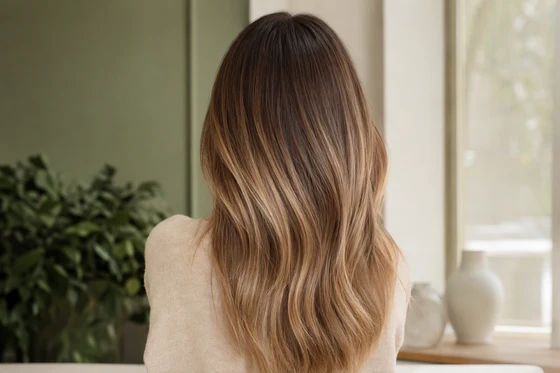
Hair grows about half an inch per month, uniformly, from every follicle. Foil highlights are saturated to within a few millimeters of the scalp, so on day one there is a high-contrast boundary sitting in a nearly straight horizontal line across your head. Every month, that entire line drops half an inch in formation. A straight, synchronized, high-contrast line is exactly what the human eye is built to detect, which is why 6-week-old foils read as “roots” from across a room.
Balayage never creates that line. The painted sections start at staggered heights, the top edge of each stroke is feathered from full saturation to nothing, and the root zone is left untouched on purpose. Growth does not move a boundary; it just extends shading that already looked gradual. There is no single depth at which the color suddenly reads grown out, so the decision to go back to the salon becomes aesthetic preference rather than damage control. That is the honest meaning of “balayage lasts 3 to 4 months”: the pigment does not last longer, the acceptable window does.
Two add-ons push the same geometry further. A root shadow or root smudge is demi-permanent color melted over the top inch, which manufactures a soft transition on foiled hair, borrowing balayage’s grow-out behavior for foil’s lift. A money piece, the bright face-framing panel, is the part you will notice growing out first regardless of technique, because it sits at your part line where regrowth is most visible.
Is balayage really healthier for your hair?
This is the claim on every salon page, so let us label it properly: mixed evidence, because the marketing conflates technique with dosage.
The damage mechanism is identical in both services. Lightener is hydrogen peroxide, usually boosted with persulfates, and it does not only destroy melanin. It oxidizes the hair’s structural proteins, and the primary casualty is the cystine disulfide bond, the sulfur-to-sulfur crosslink that gives the fiber its strength and elasticity. Bleaching converts those crosslinks into cysteic acid, degrades the cuticle layers, and increases protein loss from the fiber, with damage measurable after even mild treatments and compounding with repetition [1, 3]. Oxidative attack on the fiber is one of the best-documented findings in hair science research-backed [1, 2, 6].
The paintbrush does not change any of that chemistry. What determines damage is dosage: developer volume (10, 20, 30, or 40, which is just peroxide concentration), processing time, heat, and, above all, how many times the same strand gets re-lightened [1, 3, 6].
Where balayage earns a partial pass is in how those dosage variables usually play out. Open-air processing runs cooler, so many balayage services use moderate developer and accept less lift. And because each appointment repaints new placement rather than re-touching a root line, a well-executed balayage rarely re-bleaches previously lightened hair. Foil touch-ups, done sloppily, overlap the old line every 6 to 8 weeks, and overlap is exactly the repeated-exposure condition the damage studies flag [1]. So “balayage is gentler” is often true in practice while being false as a statement about the technique itself: a balayage pushed to maximum lift with 40-volume developer will out-damage careful low-volume foils every time. When you hear the health pitch, translate it into the real questions: what developer, how long, and will you overlap previously lightened hair?
If minimizing chemical exposure is the actual goal, the placement strategies that make color survive longer between appointments are the bigger lever; we cover them in low-maintenance hair color.
What do partial, full, babylights, and foilyage actually mean?
Menus vary by salon, but these are the standard definitions, and knowing them protects you from paying for coverage you will not see.
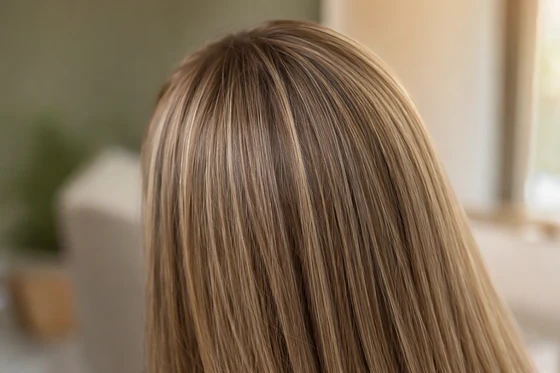
Partial vs full. Partial means the visible shell: the top layer, the part line, and the face frame, usually the front half or top half of the head. Full means everything, including the underlayers you only see when hair is up. Partial typically runs 60 to 75 percent of full price [4, 5]. The honest buying rule: if you wear your hair down most days, a partial is visually indistinguishable from a full from the front, and it halves the lightened surface area. If you live in ponytails and buns, the untouched underneath will show as a dark slab, and full is the correct spend.
Babylights. Traditional highlighting with the section size shrunk to near-strand width and the section count multiplied. The output is not stripes but an overall luminosity, like naturally sun-lightened hair. The costs are honest and unavoidable: section count is time, so expect 3 to 4 hours and $200 to 400 [5]. Because each lightened piece is so fine, grow-out is gentle, but the effect is also subtle enough that people maintaining a truly blonde look on 8 to 12 week cycles should budget for that cadence, not the balayage cadence.
Foilyage. Balayage placement, foil processing: the colorist paints by hand, then seals the painted sections in foil to capture the heat-driven lift that open air gives up. This is the modern default answer for dark brunettes who want visibly blonde results with soft grow-out, because it keeps balayage’s diffused geometry while reaching foil’s lift levels. Priced between its parents, commonly $200 to $350.
Teasylights and ombre, briefly: teasylights back-comb each section before foiling to blur the root edge inside a foil service, another grow-out-softening tool. Ombre is a horizontal gradient, dark to light down the length, bolder and less requested now, but its maintenance math is balayage-like because the root is untouched.
What does each technique cost, honestly?
Per-visit prices are only half the arithmetic. The number that matters is cost per year, which is price times visits, plus the line items salons quote separately.
The typical hidden line items: toner or gloss at $35 to 80, frequently not included in the quoted service price [4]; a standalone gloss appointment between full services at $40 to 90; long or thick hair surcharges, often 10 to 25 percent, because both product and time scale with hair mass; and Olaplex-style bond builder additives at $20 to 50. Bond builders have plausible chemistry, they are designed to protect and re-form broken crosslinks during lightening, but independent evidence on real-world outcomes is thinner than the marketing, so treat the add-on as reasonable insurance rather than proven protection [3] mixed evidence.
Sample annual math at mid-range prices. Foil partial at $150 every 7 weeks is about 7 visits, roughly $1,050 before toner and tip. Full balayage at $280 every 14 weeks is about 4 visits, roughly $1,120, and adding a $60 mid-cycle gloss at each interval brings it near $1,360. Babylights at $300 every 10 weeks is 5 visits, about $1,500. The frequently repeated claim that balayage is the cheap option is convention at best: it wins on visits per year, but its higher per-visit price means annual totals often land within a few hundred dollars of foils. What balayage genuinely saves is hours of your life in the chair and the week-6 deadline pressure.
Who should choose which?
Match the technique to three facts about your head: your natural depth, your gray percentage, and your honest maintenance appetite.
By natural depth. The further your target is from your natural level, the more the decision forces itself toward foil. Light brown to dark blonde bases can reach believable brightness with any of the four techniques, so choose on maintenance. Medium to dark brunettes wanting caramel or soft bronze dimension are the ideal balayage case: 2 to 3 levels of open-air lift lands exactly there. Dark brunettes wanting genuinely blonde results need foil physics, so the choice is foilyage for soft grow-out or traditional foils for maximum precision, possibly across two sessions rather than one aggressive sitting, which is the gentler path for the fiber [1, 3]. Which target shades are worth aiming at in the first place is a warmth-and-contrast question, covered in best hair color for your skin tone.
By gray percentage. Under roughly 25 percent gray, babylights are the precision tool: fine woven pieces starting at the root turn scattered grays into intentional-looking brightness. Between about 25 and 50 percent, highlights or foilyage with a root-adjacent start still blend convincingly. Past 50 percent, blending strategies start fighting arithmetic, and the real decision becomes blending versus full coverage, which is its own set of trade-offs; see gray blending vs gray coverage. The one clear rule: classic balayage, which avoids the root zone by design, does almost nothing for gray at the part line, so if gray is your main motivation, do not buy balayage to solve it.
By maintenance appetite. Answer honestly in weeks and dollars, not intentions. If you will actually return every 6 to 8 weeks, foils give you the most color control per dollar. If you want a 3-to-4-month cycle, balayage or foilyage within two levels of your natural depth is the entire strategy. Readers building a color plan around a busy decade, alongside cut decisions, will find the companion logic in hairstyles for women over 40.
How do you ask your colorist for what you want?
Colorists are not mind readers, and “balayage” now means five different things across salons. Bring photos and constraints, not technique names, and let them pick the tool.
Bring three photos: the goal color, ideally on someone whose starting depth resembles yours and shot in daylight rather than salon lighting; a photo showing the kind of grow-out you find acceptable, because that is the real product you are buying; and your own hair, today, in natural light, if you are doing a phone or online consult. A goal photo of a platinum result on a level-9 base is not a plan for a level-4 brunette; a good colorist will say so, and you want the one who says so.
Scripts that get honest answers:
“I want to stay within about two levels of my natural depth so the grow-out stays soft.”
“Walk me through where the line will be at week twelve. Can we build in a root smudge so there is no hard edge?”
“What developer volume are you planning, and would two lighter sessions be safer than one aggressive one for where I want to end up?”
“I am about 30 percent gray at the temples. Will this placement blend that, or do we need a different plan for the front?”
“My real budget is one visit every 12 weeks plus one gloss in between. What is the best result we can maintain on that schedule, at week ten, not day one?”
That last script is the one that changes outcomes, because it forces the plan to be designed around your actual cadence instead of the day-one photo.
The bottom line
Balayage and highlights are the same chemistry with different placement, so choose on the trade-offs, not the marketing. Foils buy maximum lift and precision at the price of a 6-to-8-week regrowth line; balayage buys a diffused grow-out and quarterly visits at the price of less lift; babylights buy subtlety at the price of hours; foilyage splits the difference for dark bases chasing blonde. The health claims mostly reduce to developer volume, processing time, and overlap control, so ask about those three instead of trusting a technique name. Decide your depth target, your gray plan, and your honest visit cadence first, and the right service is usually the only one left standing.
Frequently asked questions
How long does balayage last?
The lightened pieces are permanent on the strand; they grow out rather than fade out. What expires is the toner, which drifts warm or dull over 4 to 8 weeks, and the proportions, which read intentional for roughly 12 to 16 weeks before the painted pieces sit too far from the root. Most people book a gloss between visits and a full repaint every 3 to 4 months.
Is balayage less damaging than highlights?
Not inherently. Both use the same oxidative lighteners, and damage tracks developer strength, processing time, and how many times a strand gets re-lightened, not whether the product was painted or foiled. Balayage often ends up gentler in practice because open-air processing lifts less and the technique rarely overlaps previously lightened hair, but a high-volume balayage can out-damage a low-volume foil.
Which is cheaper, balayage or highlights?
Per visit, traditional foil highlights are usually cheaper: roughly $100 to $200 for a partial versus $160 to $320 and up for balayage. Per year, balayage often wins because you sit in the chair 3 to 4 times instead of 6 to 8. Compare annual totals including toner and gloss appointments, not sticker prices.
Can you do balayage on dark brown or black hair?
Yes, but with honest expectations about lift. Open-air balayage typically lifts 2 to 3 levels, which takes dark brunette hair to caramel and soft toffee, not to cool blonde. Reaching a bright blonde from a dark base usually requires foils or foilyage, often across two sessions, because foil traps heat and moisture and lets the lightener work harder.
What is the difference between partial and full balayage?
Partial covers the visible frame: the top layer, the part line, and the face-framing sections, usually at 60 to 75 percent of the full price. Full covers the whole head, including underneath, so the color survives ponytails, buns, and wind. If you mostly wear hair down, partial reads nearly identical from the front and is the better per-dollar buy.
Do babylights damage hair more than regular highlights?
The chemistry per strand is the same, and because babylight sections are so fine, a smaller fraction of your total hair is lightened at each visit than with chunkier foils. The risk is cumulative: babylights are usually maintained on a tighter 8 to 12 week cycle, so sloppy application that overlaps previously lightened hair adds up faster. Overlap control matters more than the technique name.
Does balayage cover gray hair?
No. Balayage is painted onto the surface of the mid-lengths and ends, and gray shows most at the root and part line, exactly where balayage does not go. Gray blending needs highlights or babylights woven from the root, and past roughly 50 percent gray the conversation usually shifts from blending to coverage.
How do I make highlights or balayage last longer between visits?
Three levers: stay within about two levels of your natural depth so regrowth contrast is low, ask for a root shadow or root smudge at the appointment so there is no hard start line, and book a toner-only gloss at the midpoint instead of a full service. Sulfate-free washing and less heat protect the toner, which is the part that visibly expires first.
What is foilyage and when is it worth it?
Foilyage is balayage application, painted by hand, then sealed in foil to process. You keep the diffused, painted placement and gain the extra lift of foil. It is the standard answer when someone with a dark base wants balayage-style grow-out at a genuinely blonde level, and it prices between the two parent techniques, commonly $200 to $350.
- Grosvenor AJ, et al. The physical and chemical disruption of human hair after bleaching: studies by transmission electron microscopy and redox proteomics. Int J Cosmet Sci. 2018;40(6):536-548.
- Trüeb RM. The impact of oxidative stress on hair. Int J Cosmet Sci. 2015;37 Suppl 2:25-30.
- Bleached Hair as Standard Template to Insight the Performance of Commercial Hair Repair Products. Cosmetics (MDPI). 2024;11(5):150.
- Fash. How Much Does Balayage Cost? Fash.com cost guide. 2026.
- Fash. Hair Highlights Cost: Average Salon Color and Dye Prices. Fash.com cost guide. 2026.
- Robbins CR. Chemical and Physical Behavior of Human Hair. 5th ed. Springer. 2012.