Hair color, decoded
The Best Hair Color for Your Skin Tone: Warm, Cool, and Neutral, Explained
The best hair color for your skin tone generally shares its temperature: warm undertones pair with gold, caramel, and copper families, cool undertones with ash, beige, and cool browns, and neutral undertones can wear both. Undertone is separate from how light or deep your skin is, so run the at-home tests first, then pick within the shade families for your depth. When tests disagree, you are probably neutral or olive, which widens your options rather than narrowing them.
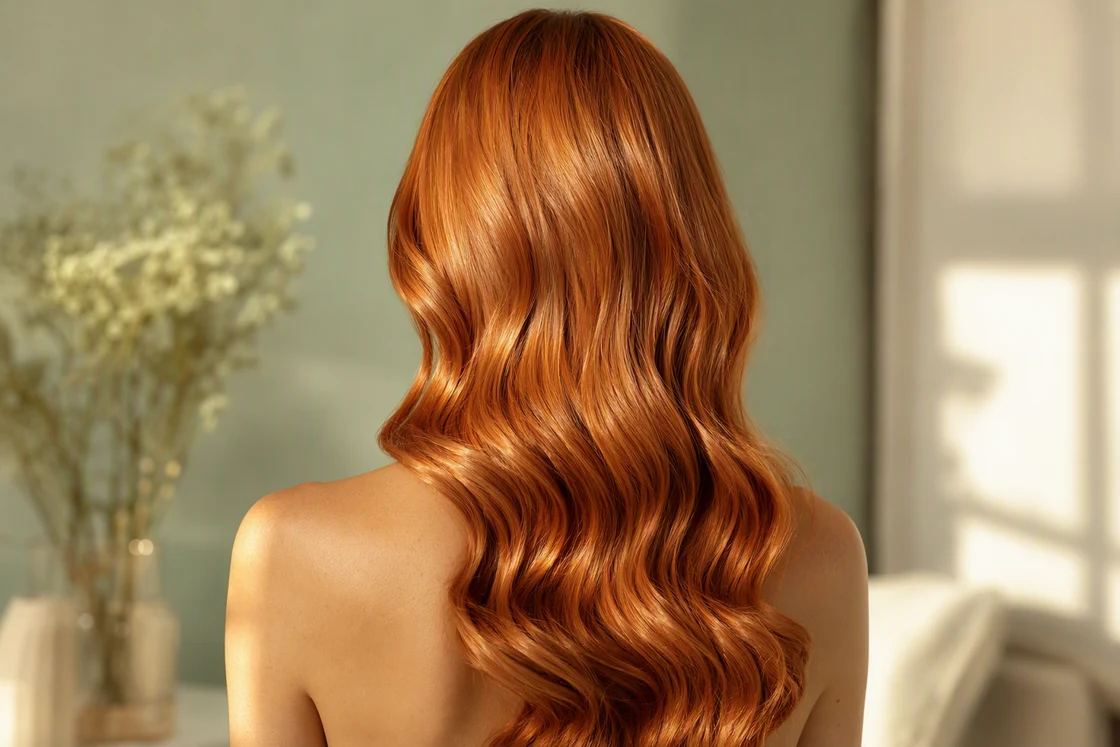
Almost every hair color regret follows the same script: the shade looked right on the swatch, right on the model, even right in the bowl, and then wrong against your face. The variable that failed was not the dye. It was the match between the color’s temperature and your skin’s undertone, an interaction that happens at your hairline whether you plan for it or not. This guide gives you the at-home undertone tests with an honest label on how reliable they are, then a full shade matrix by undertone and depth, including the olive and deeper skin tones most guides skip.
What is an undertone, and how is it different from skin tone?
Your skin has two properties that get collapsed into one word. Depth is how light or dark your skin is overall. Undertone is the subtle cast underneath the surface: golden-yellow (warm), pink-blue (cool), a balance of both (neutral), or a green-gray cast (olive). The two are independent. Pale skin can be warm, deep skin can be cool, and every combination in between exists, which is why “hair color for pale skin” is an incomplete question until you add temperature.
This is not just salon talk; the split has an instrumented version. Dermatology and cosmetic science measure skin color in the CIELAB color space, where lightness and yellowness are separate axes, and classify pigmentation with the Individual Typology Angle, a number computed from exactly those two values [1]. The ITA scale sorts skin from very light to very dark across six categories and correlates with how skin actually responds to sun exposure, which was validated in thousands of women across geographies [1, 2]. That framework is research-backed. What it measures, though, is mostly depth and yellowness for UV purposes. The warm-cool-neutral undertone system that hair color runs on is a stylist’s simplification layered on top of that physiology: directionally grounded in real skin colorimetry, but not itself a clinical classification. Worth knowing before we get to the tests, because the tests inherit that softness.
Undertone matters for hair specifically because hair is the largest block of color you wear against your face, it sits closer to your skin than any garment, and unlike clothing you cannot take it off when the light changes.
How do you find your undertone at home?
Four checks circulate, and they all belong in the same honesty bracket: convention. These are stylist and makeup-counter heuristics. None has been formally validated against instrumented skin measurement, and each one can be fooled by lighting, tanning, or redness. Used together, they still get most people to the right answer, which is why colorists keep using them. Run all four in indirect daylight, no makeup, and go with the majority.
The vein test. Look at the veins on the inside of your wrist. If they read greenish, the yellow in your skin is filtering the blue of the vein, which suggests warm undertones. If they read blue or purple, cool. If you honestly cannot decide, that itself is data: mixed or unclear veins are the classic neutral result. The mechanism is real (skin acts as a color filter), but vein depth and skin thickness vary enough between people that this is a hint, not a verdict.
The jewelry test. Hold gold and silver jewelry, or gold and silver fabric, against your bare inner arm and face. Warm undertones tend to look healthier and more continuous with gold; cool undertones with silver. This one is circular in an interesting way: it works because metals are themselves warm and cool colors, so you are really running a small harmony experiment. If both look equally fine, again, neutral.
The white paper test. Hold a sheet of pure white printer paper beside your clean face in daylight and look at your skin by comparison. Against true white, warm skin casts yellow or golden, cool skin casts pink, rosy, or faintly blue, and olive skin often shows the green-gray drab that neither label fits. This is the closest home version of what a colorist does with drapes, because it gives your eye a fixed reference.
The sun reaction test. Do you tan easily and rarely burn, or burn first and tan reluctantly? Convention maps easy tanning to warm and easy burning to cool. This is the shakiest of the four for undertone purposes. Sun response genuinely tracks pigmentation depth, which is exactly what the ITA classification captures [1, 2], but depth is not temperature: plenty of cool-toned people tan well and plenty of warm-toned people burn. Treat this one as a tiebreaker at most. mixed evidence
Two results are worth calling out. If the tests split two against two, you are probably neutral, which is good news: both warm and cool hair families will sit acceptably against your skin, and you get to choose on preference and upkeep. And if the white paper test showed that grayish-green cast, read the olive section below before anything else, because olive is the undertone the standard tests misfile most often.
What does “clashing” actually mean, optically?
“That color washes you out” sounds like folklore, but it describes a real perceptual mechanism with almost two centuries of documentation. In 1839 the chemist Michel Eugène Chevreul, running the dye works at the Gobelins tapestry manufactory, systematized what he called simultaneous contrast: when two colors sit side by side, the visual system exaggerates their differences, pushing each one’s appearance toward the complement of its neighbor [3]. The effect is research-backed and reproducible; it is a standard demonstration in vision science, not an aesthetic opinion.
Applied at your hairline: your hair is a large adjacent field of color, so it shifts how your skin is perceived without changing your skin at all. Heavily ash, blue-leaning hair pushes adjacent skin toward the opposite of blue, which is orange-yellow, so skin that already runs sallow or olive can read more yellow and tired next to it. Heavily golden hair pushes adjacent skin toward blue-red territory, so skin that already runs pink or ruddy can read redder and blotchier next to it. That is the whole of “clashing”: a predictable optical shove in the wrong direction. Matching temperature means choosing hair that shoves your skin toward the cast it already has, so the effect reads as intensity rather than distortion.
There is a second, separate optical lever: contrast of depth. Research on facial contrast shows that the luminance difference between facial features and surrounding skin is a genuine cue the visual system uses when judging faces, and that this operates across ethnic groups [4, 5]. For hair, the practical translation is that how light or dark your hair is relative to your skin changes how defined your whole face reads. High contrast (deep hair on fair skin, or light hair on deep skin) reads graphic and deliberate but shows every regrowth line; low contrast (hair near your skin’s own depth) reads soft and forgiving but can blur definition if it drifts too close. Neither is correct. They are different settings, and knowing which one you are buying is half the decision. If you want to preview the contrast setting before committing, running your face through a few shades in an AI hairstyle try-on tool is a zero-cost way to see the simultaneous-contrast effect on your own skin instead of a model’s.
Which hair colors suit warm undertones?
If your tests came back warm, your shade families are the ones with gold, red, or orange in their base: golden blonde, honey, butterscotch, caramel, copper, auburn, chestnut, golden brown, and warm chocolate. These share your skin’s yellow-golden cast, so simultaneous contrast intensifies the glow instead of fighting it.
By depth. Fair and warm: honey blonde, golden blonde, strawberry blonde, light copper. Medium and warm: caramel, golden brown, rich copper, auburn. Deep and warm: chestnut, mahogany, warm espresso, and caramel or honey worked through as dimension.
What to be careful with: strongly ash or icy shades. They will not ruin anything structurally, but flat ash against genuinely golden skin is the classic wash-out pairing, and you will find yourself adding blush to compensate. If you love the cool look anyway, ask for “cool but not ash”: a beige or neutral formulation keeps the modern muted finish without the full blue base.
The screenshot line for your colorist: “My undertone tests warm. I want a gold or copper base, nothing ash, and please formulate so it does not fade brassy-orange, which warm bases tend to do.” That last clause matters because warmth is also the direction hair fades naturally; a warm-on-warm plan should include a gloss schedule, typically every six to eight weeks at 25 to 75 dollars, to keep the intended gold from drifting into raw orange.
Which hair colors suit cool undertones?
If your tests came back cool, your families carry blue, violet, or green in the base: ash blonde, platinum, beige blonde, mushroom brown, cool chocolate, espresso, and blue-black. Against pink-blue skin these read clean and intentional, and they are the shades that make cool skin look like a decision rather than an accident.
By depth. Fair and cool: ash blonde, icy blonde, beige blonde, cool light brown. Medium and cool: mushroom brown, cool chestnut, dark beige blonde as dimension. Deep and cool: espresso, soft black, blue-black, with icy or champagne accents if you want lightness.
What to be careful with: heavy gold and orange. Brassy warmth against cool-pink skin is the mirror-image wash-out, amplifying redness you did not ask for. The maintenance honesty here runs opposite to the warm section: cool shades are chemically uphill, because hair’s underlying pigment exposed by any lightening is warm. Ash and platinum results depend on toner, and toner fades. Budget for purple or blue shampoo at home and a salon toner roughly every four to eight weeks, or accept that your cool shade will warm up between visits.
The screenshot line: “I test cool. I want an ash or beige base, no gold, and tell me honestly what the toner upkeep will be for this shade on my hair.”
What about neutral and olive undertones?
Neutral is the easy verdict that feels like a non-answer: both temperature families work, so choose on other grounds. Sensible tiebreakers are your eye color (echoing it in the hair’s tone tends to read cohesive), your fade tolerance (warm shades fade friendlier, cool shades fade needier), and your contrast preference as covered above. Beige, sand, mushroom, and neutral chocolate, the shades sitting between temperatures, are effectively engineered for you.
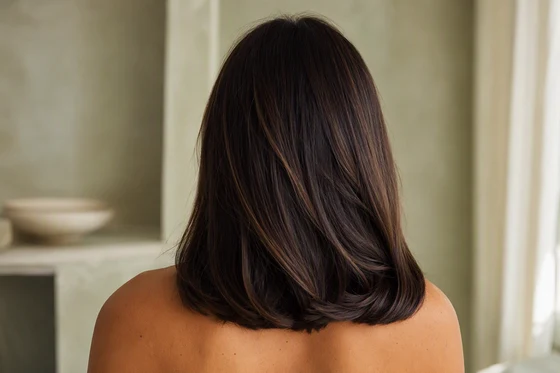
Olive deserves the section competitors skip. Olive skin, common across Mediterranean, Latin American, Middle Eastern, South Asian, and many mixed backgrounds, carries a greenish-gray cast that the warm-cool binary misfiles constantly. Olive usually behaves cool-neutral in practice, but it punishes both extremes: heavy gold amplifies sallowness (yellow next to green-yellow skin doubles down on it), while flat ash can go drab, because ash’s gray-green base matches the skin’s cast so closely that everything blurs into one khaki field. This is convention from colorists who work with olive skin daily rather than measured science, but the simultaneous-contrast logic behind it is sound [3].
The reliable olive families: neutral and cool browns, espresso, mocha, soft black, and dimensional color that uses muted caramel or toffee as ribbons rather than as the all-over shade. Rich reds with blue-violet bases (burgundy, cherry cola) also sit well against olive because they oppose the green cast cleanly. Going blonde over olive skin is absolutely doable but is precision work: ask for beige or sand blonde, not gold and not platinum-ash, and expect toner maintenance. The screenshot line: “My skin runs olive. I want neutral to cool-neutral, no heavy gold, no flat ash. Muted, dimensional, and formulated against both brass and khaki.”
What about deeper skin tones?
Most guides treat deep skin as a single category, which is exactly the mistake this system exists to avoid. Deep skin spans warm, cool, neutral, and olive undertones just like every other depth, and the same tests apply: vein cast, gold versus silver, the white paper check. The undertone answer then routes you to the same families, expressed at your depth.
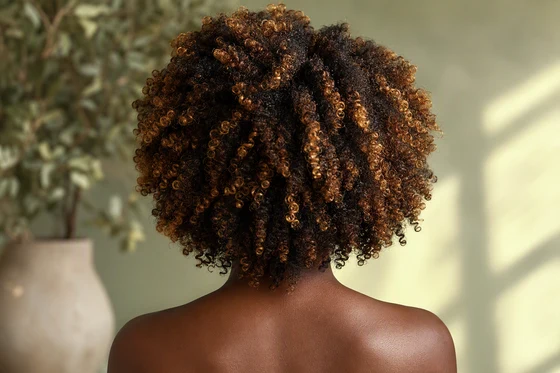
Deep and warm: honey, caramel, golden brown, copper, cinnamon, either all over or as highlights and balayage through a deep base. Deep and cool: espresso, blue-black, cool dark brown, with icy, champagne, or silver accents if you want visible lightness. Deep and neutral: nearly the full menu, chosen by contrast preference.
Two honest notes specific to going lighter on dark natural hair. First, chemistry: lifting deeply pigmented hair to blonde or light caramel passes through strong orange-red stages and often takes two or more sessions spaced weeks apart, at a realistic 300 to 600 dollars total in US cities, and a colorist who promises it in one cheap sitting is planning to damage your hair. Second, contrast: light color on deep skin is the highest-contrast setting available, and per the facial-contrast research, contrast is a genuine perceptual signal [4, 5]. It reads striking and deliberate, which is precisely why it works, and also why regrowth shows quickly and upkeep is real. Budget for it or choose ribbons of light through a deep base instead, which delivers most of the effect at a fraction of the maintenance. The technique trade-offs are covered in our balayage versus highlights guide.
The shade matrix: undertone by depth
Find your row (undertone) and your column (depth). Cells list the families to ask for first, then the caution.
| Fair / pale | Light to medium | Olive / medium | Tan to deep | Deepest | |
|---|---|---|---|---|---|
| Warm | Golden blonde, honey, strawberry. Caution: platinum ash. | Caramel, golden brown, copper. Caution: mousy ash brown. | Warm only as muted caramel dimension. Caution: heavy gold. | Chestnut, cinnamon, rich copper. Caution: icy tones. | Warm espresso, mahogany, caramel balayage. Caution: cool black flatness. |
| Cool | Ash blonde, icy, beige blonde. Caution: gold, brass. | Mushroom brown, cool chestnut, beige. Caution: orange fade. | Cool-neutral brown, espresso. Caution: flat khaki ash. | Espresso, cool dark brown, icy accents. Caution: brassy caramel. | Blue-black, espresso, silver or champagne accents. Caution: warm-red fade. |
| Neutral | Beige, sand blonde, neutral light brown. | Neutral chocolate, bronde, sand. | Mocha, neutral brown, soft black. | Neutral dark brown, subtle toffee dimension. | Soft black, neutral espresso, any accent temperature. |
| Olive | Beige blonde, cool light brown. Caution: gold and platinum both. | Neutral brown, mocha. Caution: khaki drab. | Espresso, soft black, burgundy. Caution: all-over gold. | Cool espresso, cherry-cola red. Caution: heavy honey. | Blue-black, deep burgundy. Caution: golden all-over lightening. |
Read the matrix as a starting bid, not a law. Every cell has exceptions worn brilliantly by someone, usually on purpose and with a colorist who understood the contrast math they were playing with.
Is seasonal color analysis real?
You have almost certainly met this system on TikTok: draped analysts sorting people into Deep Winter or Soft Autumn, often in videos with millions of views. The lineage is older than the app. The idea of typing people by natural coloring traces to Bauhaus painter Johannes Itten, was carried into wardrobe consulting by Suzanne Caygill, and went global when Carole Jackson’s 1980 book Color Me Beautiful sold in the tens of millions and put four-season draping into every mall in America [6]. The current twelve and sixteen-season versions are elaborations on Jackson’s four.
The honest evidence label: convention. No peer-reviewed validation of seasonal assignments exists; two trained analysts can and do type the same person differently, and the strict palette prescriptions (a Summer must never wear orange) have no measured basis. What the system does contain is a workable compression of the two real variables this article runs on, temperature and depth, plus contrast level. Winter is cool-deep-high-contrast, Autumn is warm-deep-muted, and so on. If seasonal analysis helps you remember your lane, use it happily. Just know that the load-bearing parts are undertone and depth, which you can test directly, and the rest is branding on top.
How do you take this to a colorist?
Bring the two data points, not a celebrity photo alone. “My undertone tests warm and my skin is medium depth; I am thinking caramel or golden brown, what would you formulate?” is a brief a professional can execute. A photo helps as a second step, ideally of someone whose skin depth and cast resemble yours, because a shade photographed on different skin is a different shade to the eye [3].
Three questions worth asking before anyone mixes: “What will this fade to in six weeks, warmer or duller?” “What is the toner and gloss schedule and cost to hold this tone?” “Given my regrowth, how visible will the line be at week eight?” And two situational routes: if most of your color decision is really a gray decision, start with gray blending versus gray coverage, where undertone still applies but the strategy question comes first. If you are past 50 and weighing depth changes along with tone, the fuller decision tree is in our guide to hair color for women over 50.
The bottom line
Undertone and depth are separate dials, and hair color goes wrong mostly when people match only one. The home tests, vein, jewelry, white paper, sun response, are unvalidated conventions, but run together they sort most people correctly and cost nothing; ambiguity usually means neutral, and a green-gray cast means olive, which has its own rules. The matching rule itself rests on real perception science: adjacent colors shift each other predictably, so hair that shares your skin’s temperature amplifies it while a mismatched temperature distorts it. Pick your family from the matrix, decide how much contrast and upkeep you are honestly buying, and give your colorist the undertone brief in plain words. The shade on the swatch was never the question; the shade next to your face is.
Frequently asked questions
How do I tell if I have warm or cool undertones?
Stack three quick checks: look at your wrist veins in daylight (greenish reads warm, blue-purple reads cool), note whether gold or silver jewelry looks more natural against your skin, and hold a pure white sheet of paper next to your bare face to see if your skin casts yellow-golden or pink-blue by comparison. These are stylist conventions rather than validated tests, so treat two-out-of-three agreement as your answer. If the checks split evenly, you are likely neutral.
What is the best hair color for pale skin?
It depends on your undertone, not your paleness. Pale and warm pairs well with golden blonde, honey, strawberry, and light copper; pale and cool pairs with ash blonde, beige blonde, and cool light brown. The one caution for very fair skin is extreme contrast: jet black or platinum both work, but they are high-commitment looks that show regrowth fast and demand toner upkeep.
What hair colors suit olive skin?
Olive skin usually carries a green-gray cast that behaves as its own category: strongly golden shades can amplify sallowness and very ashy shades can read flat and gray against it. The reliable families are neutral and cool-neutral browns, espresso, mocha, soft black, and muted caramel used as dimension rather than as an all-over shade. Olive skin also tends to hold deeper colors well because the natural contrast is already there.
Can dark skin go blonde or light brown?
Yes, and the undertone logic is identical: deep skin with warm undertones suits honey, caramel, golden brown, and copper; deep skin with cool undertones suits espresso, cool dark brown, and blue-black, with icy or champagne tones as accents. The honest constraint is chemistry, not suitability: lifting dark hair to blonde takes multiple sessions, costs several hundred dollars, and needs a colorist experienced with controlled lightening to protect the hair.
Is the vein test for undertones accurate?
It is a rough screening habit, not a measurement. Vein color through skin depends on vessel depth, skin thickness, and lighting as much as on undertone, and there is no formal study validating it against instrumented skin color measurement. It stays useful because it is free and directionally right often enough, but run it alongside the jewelry and white-paper checks rather than alone, and let a colorist confirm in person.
What does it mean when a hair color washes you out?
It is usually simultaneous contrast: the visual system exaggerates the difference between adjacent colors, so hair tint pushes the perceived tone of the skin next to it toward its own opposite. Very ash hair against already-cool or sallow skin can push the face toward gray or yellow; very gold hair against ruddy skin can amplify redness. Washing out is an optical interaction at the hairline, not a flaw in your skin or in the shade itself.
Is seasonal color analysis (spring, summer, autumn, winter) scientifically valid?
No formal validation exists. The system runs from Bauhaus color theory through Suzanne Caygill to Carole Jackson's 1980 book Color Me Beautiful, and it is best understood as a styling framework that bundles undertone and depth into memorable categories. Its core intuition, matching color temperature to skin, is consistent with how color perception works, but the twelve-season assignments and strict palette rules are convention, not science.
Should I go warmer or cooler as my hair goes gray?
Gray hair has lost pigment, so it naturally shifts your overall look cooler and softer in contrast. Many colorists nudge remaining color slightly warmer or more neutral to keep skin from reading flat, but this is a stylist convention and the right answer depends on your undertone and how much gray you have. If you are deciding whether to work with the gray or cover it, that choice matters more than the tone question.
How much does professional hair color cost in the US?
Rough 2026 salon ranges: a single-process all-over color runs about 80 to 150 dollars, partial highlights 100 to 200, full highlights or balayage 150 to 350 and higher in major cities, and a toner or gloss 25 to 75. Corrective color after a mismatched or box-dye shade is the expensive one, often 200 to 500 dollars across multiple sessions, which is the financial argument for getting undertone right before you color, not after.
- Chardon A, Cretois I, Hourseau C. Skin colour typology and suntanning pathways. Int J Cosmet Sci. 1991;13(4):191-208.
- Del Bino S, Bernerd F. Variations in skin colour and the biological consequences of ultraviolet radiation exposure. Br J Dermatol. 2013;169(s3):33-40.
- Chevreul ME. The Principles of Harmony and Contrast of Colours, and Their Applications to the Arts. London: G. Bell and Sons; 1890 (orig. 1839).
- Porcheron A, Mauger E, Russell R. Aspects of facial contrast decrease with age and are cues for age perception. PLoS ONE. 2013;8(3):e57985.
- Porcheron A, et al. Facial contrast is a cross-cultural cue for perceiving age. Front Psychol. 2017;8:1208.
- Carole Jackson (author of Color Me Beautiful, 1980). Wikipedia.