Hair after 50
Haircuts That Make You Look Younger: What Actually Does the Work
What reads as younger in a haircut is mechanical, not mystical: movement in the hair, apparent density, a shape that is current rather than dated, and upkeep that fits your real routine. Any cut that delivers those four reads fresh at any age. This guide breaks each lever down and names the cuts that pull all of them at once.
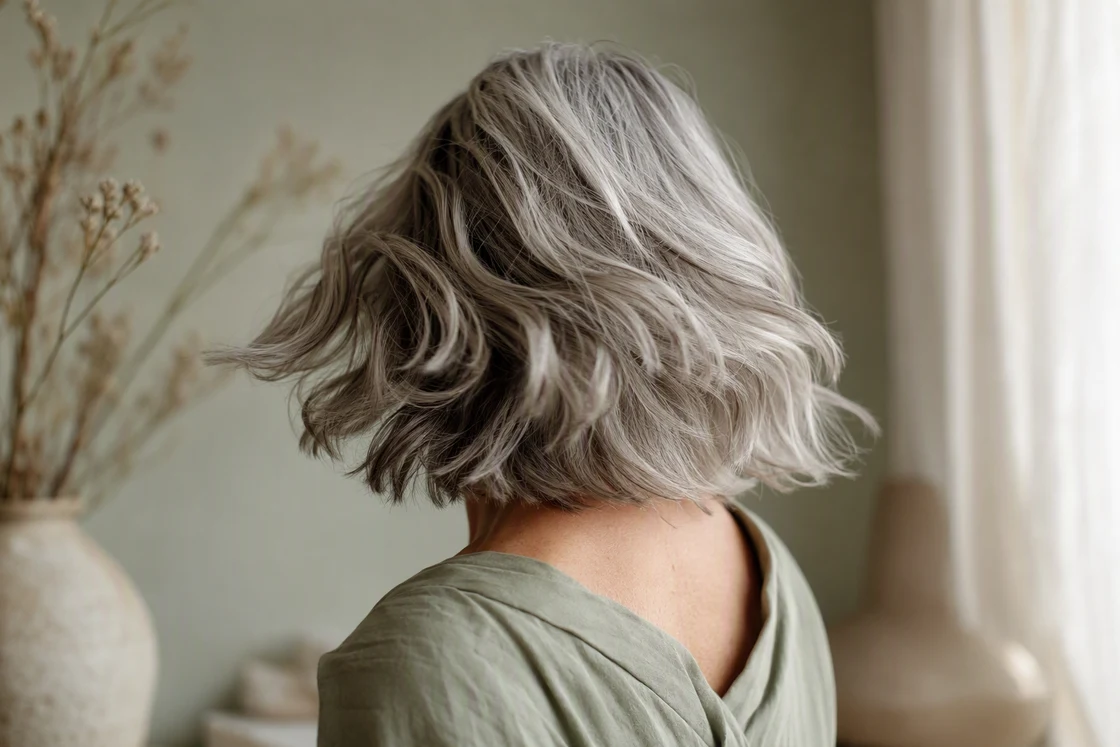
Let’s start with what this query actually means, because the phrase deserves a straight answer. When people search for haircuts that make you look younger, they are almost never asking to pass for a different decade. They are saying: my hair reads flat, or thin, or stiff, or stuck in an old shape, and I want it to read alive again. That is a real, solvable brief, and it has nothing mystical in it.
What reads as “younger” in a cut is four mechanical things. Movement: hair that shifts when you do instead of sitting in a fixed shell. Apparent density: hair that reads full at the perimeter and the part, wherever your actual count now sits. Shape currency: a silhouette from this fashion cycle instead of a previous one. Upkeep fit: a cut that still looks intentional in week five on a normal Tuesday, not just in hour one at the salon. Any cut that delivers all four reads fresh on any head, at 38 or 68. Any cut that misses them reads tired at any age, including on 25-year-olds.
The rest of this guide takes the levers one at a time, then names the cuts that pull all four at once, then covers what does not do the work no matter how often it gets promised. It pairs with our broader guides to hairstyles for women over 40 and hairstyles for women over 50, which choose cuts by density and texture rather than by birthday; this page is the narrow answer to the narrow question.
Why does movement matter more than length?
Because stillness is the tell. Hair that moves, separates, and resettles reads healthy and current; hair locked into position, whether by over-layered wisps, daily flat-ironing, or a sprayed set, reads dated regardless of the cut underneath. If you take one lever from this page, take this one.
The mechanism has two halves. The first is fiber. Hair changes materially over time: the scalp produces less sebum, the fiber carries less lipid and less water, and unpigmented strands often grow with more curvature and spring [4, 5]. Drier, stiffer fiber does not swing on its own; it holds whatever position styling put it in. So the styling habits that worked on 35-year-old fiber, especially aggressive heat smoothing, now produce exactly the frozen texture you are trying to get away from, plus more weathering to the fiber next month.
The second half is the cut. Movement is engineered, and the engineering is specific: soft internal layers that let sections slide over each other, weight removed from wherever hair bunches into bulk, ends left with texture rather than ironed to a sealed edge, and a shape cut to your natural wave so air-drying produces the style instead of ruining it. Ask your stylist for movement by name and mean it structurally: “I want this to move when I walk.” Note what movement is not: it is not maximum layering. Over-layered hair collapses into disconnected strings, which is the other way to lose the swing. Movement lives between the helmet and the shag-gone-wrong, and a good cutter knows exactly where that is for your density.
What is apparent density, and how do you get it back?
Apparent density is how full the hair reads, and it is only loosely coupled to how many hairs you have. That gap is where a cut does its work.
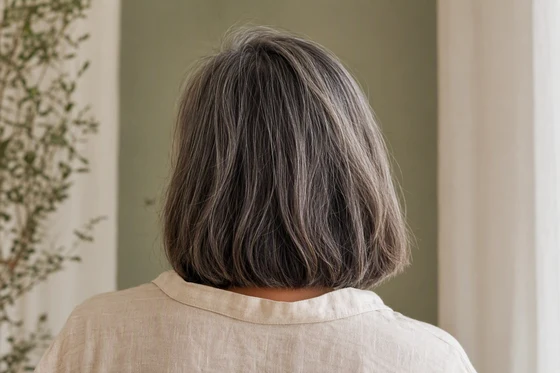
The underlying change is real and measured. In a study of 1,099 women aged 18 to 66, hairs per square centimeter fell steadily with age at an accelerating rate, while average fiber diameter peaked in the early-to-mid 40s and then declined [1]. This is research-backed, and so is the perception side: in experiments that systematically manipulated hair diameter, density, and style on otherwise identical stimuli, observers’ estimates of age and health tracked those manipulations [2]. In plain terms, density is a number, but apparent density is a read, and the read responds to the cut.
Three moves raise the read. First, put the perimeter where the density is. Reduced density shows most at the ends, because length spreads a fixed fiber count over maximum distance. Raising the hemline to where the hair is still substantial, often somewhere between chin and collarbone, means every inch you keep reads full. Blunt or minimally layered ends compound this: a perimeter where all the hair arrives at once reads dense because it is dense at that line.
Second, remove weight only where you still have surplus. If your hair has thinned at the temples or crown but stays heavy at the back, a cutter can debulk the heavy zones so the thinner zones stop looking sparse by contrast. Layering is a budget: spend it where you are rich, never at a perimeter that is already the weak point.
Third, manage the part line, because the part is where scalp shows first. A part worn in the same place for a decade trains a widening line into the hair. Moving the part even an inch, cutting in a soft curtain fringe that breaks the line at the front, or switching to a deep side part that folds crown hair over the sparser side, all raise apparent density at the exact spot people look at in conversation. This is the cheapest fuller-reading change in the entire guide, and sometimes it needs no scissors at all.
If thinning is your main concern, the cut families that concentrate density best are covered spec by spec in our guide to short hairstyles for women over 50.
What makes a cut read current instead of dated?
A shape from this fashion cycle rather than a previous one. This lever is worth being honest about: it is convention, not biology. Fashion cycles are collective agreement, they rotate every decade or so, and today’s current shapes will themselves read dated in time. But convention is still a real perception input, because a shape strongly associated with an earlier era gets read as “hasn’t updated,” and that read lands on the whole presentation, not just the hair.
The current-versus-dated pairs, as of this cycle: curtain bangs and long soft fringe instead of the heavy diagonal side sweep; lived-in, blended layers instead of chunky, disconnected 2000s layers; dimensional, root-blended color instead of skinny contrast highlights; soft air-dried texture instead of ironed-glass flatness or a sprayed helmet. The common thread is that current shapes look low-effort and touchable while dated ones look constructed. You do not need to chase trends to use this lever. You only need the silhouette to not be frozen: one honest conversation about the overall shape every couple of years keeps a cut inside the current window without ever making you a trend-follower.
Gray belongs in this section, because gray is partly a shape-currency question. Perception research does find that gray shifts age estimates on its own [3], but the same literature and every working stylist will tell you the read depends heavily on context: gray in a sharp, current, well-maintained shape reads as a deliberate choice, while identical gray in a grown-out or dated shape gets read as letting go. If you are keeping your gray, the cut is doing double duty, and it is worth paying for the good version. If you are coloring, same rule: color rides on the shape underneath it.
Why does upkeep fit decide how a cut reads?
Because nobody sees your haircut on day one. They see it in week four, on a Tuesday, after you slept on it and had eleven minutes to get out the door. A cut that only performs with twenty daily minutes of round-brushing you will not actually do is, in practice, a worse haircut than a simpler shape that holds on its own. The dated look most people are trying to escape is very often not an old cut; it is a demanding cut in a state of collapse.
So audit honestly before you choose. Minutes you will really spend on a normal morning, not an ideal one. Weeks you will really go between appointments, not the schedule the cut assumes. Whether you will use heat at all. Then pick the best shape inside that budget rather than the best shape in the salon photo. A texture-matched cut that air-dries into place delivers movement and shape currency every single day; a more ambitious cut delivers them only on the days you pay for them. Week five is the honest benchmark: ask your stylist directly what this cut looks like in week five with no styling, and listen for a specific answer.
Which cuts deliver all four?
No cut is universal, but four families reliably pull all four levers when matched to the right hair. Each entry names who it serves.
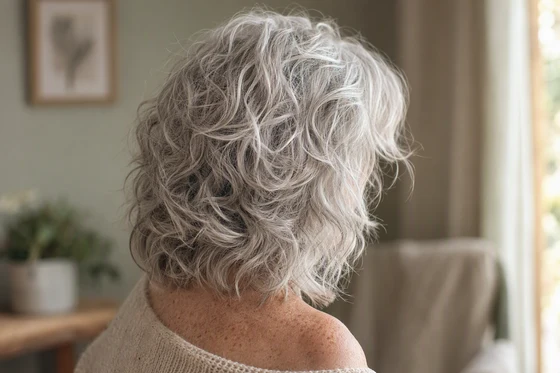
The lob with soft layers. Collarbone length, blunt-leaning perimeter, a few long layers and face-framing pieces. This is the highest-percentage answer on this page. The length keeps a ponytail option, the mostly-blunt hem keeps apparent density, the soft layers and face-frame supply movement, the silhouette is squarely current, and it forgives eight weeks between trims. Serves fine-to-medium hair with stable or mildly reduced density, and anyone who wants change without commitment.
The midi shag. Shoulder-ish length, genuine layering, cut for wave and worn air-dried. This is the maximum-movement option, and it is the one that turns wiry, springy gray texture from a management problem into the actual style, because the layers give the new curvature somewhere to go [5]. Serves medium-to-thick hair with wave, and drier texture that fights smoothing. Fine, low-density hair should take the moderated version described in the FAQ. The full layer-placement logic lives in our guide to medium-length hairstyles for women over 50.
The textured bob. Chin to jaw, blunt enough at the hem to stack density, with just enough interior softness that it moves instead of sitting as a shell. This is the thinning-hair workhorse: maximum concentration of fiber, minimum daily styling when cut to your texture, and a shape that has been continuously current for a decade. Serves fine and thinning hair first, and anyone whose maintenance budget is near zero.
Long with a face-frame. One length through the back, maintained ends, graduated pieces from cheekbone to jaw around the face, optionally a curtain fringe. This is the proof that no length is off the table: the face-frame delivers movement and a current front, the untouched length keeps the perimeter dense, and the upkeep is a trim every eight to twelve weeks. Serves strong density that genuinely supports the length. The one requirement is honest ends: see-through length spends the density lever badly, and moving the hem up is the repair.
What does not do the work?
Two purchases fail reliably, and both are popular.
Chasing a decade-old photo of yourself. The strongest pull in any consultation is your own hair at its remembered best. But that cut was engineered for hair you no longer have: different density, different diameter, different wave, different oil supply [1, 4]. Rebuilt on today’s fiber, the old cut does not produce the old result; it usually produces a thinner, flatter quotation of it, which invites exactly the comparison you did not want. The photo is still useful data about shapes you love. Hand it to your stylist as a mood, not a spec, and let them rebuild the idea for the current material.
Cuts priced in daily heat you will not spend. A shape that requires thirty minutes of blow-dry sculpture delivers its four levers only on days you pay the thirty minutes. Every other day it delivers collapse, and collapse reads worse than a modest cut that holds. Aged fiber also has less margin for daily heat, so the habit degrades the material it depends on [4]. If you love a demanding shape and genuinely do the work, that is a valid trade. Buying it on hope is not.
And one non-purchase: color alone. Fresh color on a flat or dated shape moves almost nothing, because three of the four levers live in the cut.
How do you take this into the salon?
Ask for the levers by name. “I want movement, so cut this to air-dry into shape.” “My part has widened, so let’s move it and soften the front.” “Keep the perimeter blunt, my density needs it.” “Assume I style for five minutes, no heat.” A stylist hearing this level of specificity can build you something honest, and the ones worth keeping light up when a client arrives knowing her own hair.
We keep a printable salon consultation checklist with the constraint prompts and the four questions worth asking before anyone picks up scissors. The rest of the series, from cut families to gray strategy, lives in the over-50 hub. The one-line version of this whole page: fresh is not an age reading, it is a spec. Movement, apparent density, a current shape, upkeep you will actually keep. Order those four, in your words, and the cut will do the work.
Frequently asked questions
Does short hair make you look older or younger?
Neither, by itself. Short cuts concentrate your fibers into less length, so on fine or thinning hair they raise apparent density, which reads fresh. But a short cut in a stiff, dated shape reads as dated as any length. The mechanism is density plus movement plus shape currency, and short delivers the first automatically while the cut itself has to deliver the other two.
Do bangs help you look younger?
Curtain bangs and long, soft fringe add movement at the front of the face, bring light onto the forehead, and put hair over the temples, where density commonly drops first. Those are real mechanical effects. A heavy, solid fringe does the opposite on a thinned hairline: it needs density the hairline may not have, and it removes movement from the one zone everyone sees.
Does one-length hair age you?
One length is not the problem; weight and flatness are. A one-length cut on heavy hair can sit flat against the head, and flat, unmoving hair is what reads tired. On fine hair, the same one-length line does the opposite: it stacks every fiber at the perimeter and reads dense. Judge the axis of weight and movement, not the layer count.
What is the best cut if my hair is thinning?
A cut that moves the perimeter up to where your density still is: a blunt or softly textured bob between chin and collarbone is the standard answer. Blunt ends stack fibers at the line where thinning shows most, and a shorter shape never asks the hair to cover distance it cannot. Long, heavily layered lengths spread reduced density over maximum area, which is the worst available math.
Does gray hair make you look older?
In perception studies, gray does shift age estimates, but the effect is entangled with condition and shape: gray worn in a current, deliberate cut with maintained ends reads as a choice, while gray in a grown-out shape gets read as neglect, which is the harsher signal. Whether to color is entirely your call. The cut and the condition of the fiber are the levers that stay in your hands either way.
Which matters more, color or cut?
The cut. Color changes contrast and shine, which are real perception inputs, but the cut controls movement, apparent density, and shape currency, three of the four levers. Fresh color on a flat, dated, or collapsing shape changes very little. A current cut with movement, worn in your natural color including gray, does most of the work on its own.
How often should you update your cut, not just trim it?
Review the shape itself every couple of years, separately from your trim schedule. Trims maintain a shape; they do not notice that the shape has drifted out of currency or that your density and texture have changed underneath it. A cut chosen five years ago was built for five-years-ago hair. Ask your stylist directly: if I walked in new today, would you build this same cut?
What makes a haircut look dated?
Shapes frozen from a previous cycle: chunky disconnected layers and skinny contrast highlights from the 2000s, a heavy diagonal side sweep, ironed-flat lengths, or a stiff set-and-spray helmet. The common thread is stiffness and visible effort. Current shapes read soft, lived-in, and air-dry-friendly. Note that this is fashion, so today's current will date too; the durable move is matching the cut to your texture.
Can long hair still read fresh after 40 or 50?
Yes, when your density supports the length and the ends are maintained. Long hair reads fresh through the same levers as any cut: face-framing pieces for movement at the front, a substantial perimeter rather than see-through ends, and no daily flat-ironing to glass. If the bottom third of your hair is noticeably sparser than the mid-lengths, raising the perimeter will make what you keep read fuller.
Do shags work on fine hair?
Carefully, and only in a moderated form. A true shag removes a lot of interior and perimeter weight, and fine, lower-density hair cannot afford to spend much perimeter. Ask for the soft version: fewer, longer layers, face-framing kept, and the blunt line mostly preserved at the hem. On fine hair, most of the shag's payoff can be had from texture and face-frame alone.
- Robbins C, et al. What women want: quantifying the perception of hair amount, an analysis of hair diameter and density changes with age in Caucasian women. Br J Dermatol. 2012;167(2):324-332.
- Will F, Fink B, et al. Perceptions of female age, health and attractiveness vary with systematic hair manipulations. Int J Cosmet Sci. 2026.
- Gray hair influences perceived age and social perceptions. Front Psychol. 2025;16:1541836.
- Trüeb RM. Aging of hair. J Cosmet Dermatol. 2005;4(2):60-72.
- O'Sullivan JDB, et al. Human hair graying revisited: principles, misconceptions, and key research frontiers. J Invest Dermatol. 2024.